

Best Prebiotic Fiber: How to Nourish Your Gut Bacteria the Right Way
The conversation around gut health has shifted. While the focus was once on probiotics (the beneficial bacteria themselves), research now highlights what these bacteria need to thrive in your gut. This is where prebiotic fiber comes in. Understanding what prebiotic fiber is, its best sources, and how it differs from other fibers is one of the most practical ways to support long-term gut health. The answers, however, are more nuanced than most supplement labels suggest.
What Prebiotic Fiber Actually Is
Prebiotics are dietary fibers that resist digestion in the small intestine. They travel to the colon intact, where they become fuel for beneficial gut bacteria. Unlike other fibers, prebiotics don't just pass through the gut; they selectively stimulate the growth and activity of these beneficial microbes.
As bacteria feed on prebiotic fiber, they produce short-chain fatty acids like butyrate, propionate, and acetate. These compounds are vital to our health. They nourish colon cells, regulate immune function, reduce inflammation, and play a key role in metabolic health.
The most studied prebiotic fibers include inulin, fructooligosaccharides (FOS), galactooligosaccharides (GOS), and resistant starch. Since each type feeds different bacterial populations, microbiome research suggests that the diversity of prebiotic sources is more important than the quantity.
The Best Prebiotic Fiber Foods
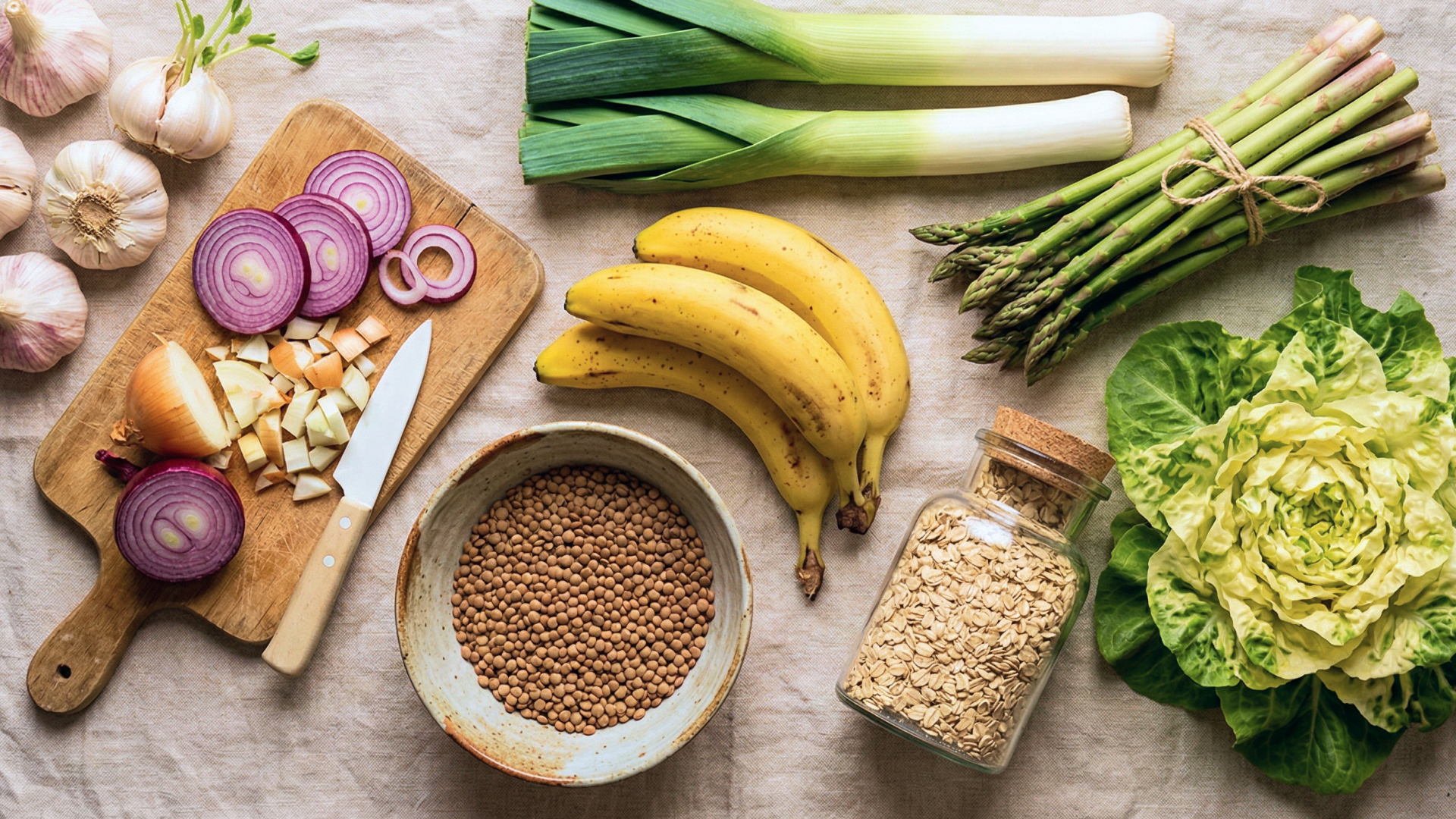
Whole foods are the most effective and well-researched source of prebiotic fiber, with substantially stronger evidence supporting them over isolated prebiotic supplements. This is because the prebiotic compounds in whole foods are embedded in a complex food matrix. This structure includes other fibers, polyphenols, vitamins, and minerals, which work together to produce effects that no isolated extract can replicate. Some of the best prebiotic fiber foods include:
- Chicory root: It has the highest concentration of inulin of any commonly eaten plant and is the source for most commercial inulin supplements.
- Garlic and onions: These accessible and well-researched foods are rich in inulin and FOS. Studies show they selectively increase Bifidobacterium and Lactobacillus species.
- Leeks and shallots: Offering similar prebiotic compounds, they are easy to add to everyday meals.
- Asparagus: This vegetable is a concentrated source of inulin and provides a range of vitamins and polyphenols.
- Jerusalem artichoke: Though less common, it has one of the highest prebiotic fiber densities available, making it a worthy addition for those looking to increase their intake.
Slightly underripe bananas are also a good source of resistant starch. This prebiotic fiber is different from inulin and FOS, as it feeds different gut bacteria and produces high amounts of butyrate during fermentation.
Other significant sources of resistant starch include cooked and cooled potatoes, rice, and legumes. The cooling process turns some of their digestible starch into a resistant form that travels to the colon intact. Oats contain beta-glucan, another soluble prebiotic fiber known to improve both gut and heart health. Additionally, legumes like lentils, chickpeas, and black beans are among the most nutritionally complete sources of gut-friendly fiber, as they combine prebiotics with protein and other essential nutrients.
Prebiotic Fiber Supplements: When They Help and Where They Fall Short
With the growing market for prebiotic fiber, inulin and fructooligosaccharides (FOS) have become common additions to gut health products, prebiotic sodas, and fiber-fortified foods. These supplements can be genuinely useful, especially for individuals gradually building better eating habits, managing specific digestive conditions, or struggling to meet their fiber needs through diet alone. An appropriate dose of a quality inulin or FOS supplement can significantly increase beneficial gut bacteria over time. Similarly, resistant starch supplements have a reasonable evidence base for supporting butyrate production.
However, it's important to understand the limitations of these supplements.
1. Limited Microbial Diversity
First, most prebiotic supplements only contain one or two types of fiber. This narrow scope feeds a limited portion of your gut's microbial community, whereas a diverse microbiome requires a wide variety of prebiotic compounds.
2. Lacks the Complexity of Whole Foods
Second, the isolated fibers in supplements lack the complex nutritional matrix of whole foods. This means they are unlikely to replicate the full health benefits of a diet rich in prebiotic foods.
3.May Cause Digestive Discomfort
Third, highly fermentable fibers like inulin and FOS can cause significant bloating, gas, and digestive discomfort, especially when consumed in large doses or if your gut isn't accustomed to them. This is a key concern, as many processed foods now contain added inulin without clearly stating the amount.
The most useful role for a prebiotic supplement is as targeted support alongside a varied whole-food diet, not as a shortcut around one. Treating a prebiotic supplement as the best fiber supplement available in any situation misses the point. Of course, the context and individual need matter.
Soluble vs. Insoluble Fiber in the Prebiotic Context
Most prebiotic fibers (like inulin, FOS, GOS, beta-glucan, and resistant starch) are soluble. They ferment in the colon, where gut bacteria break them down to produce beneficial short-chain fatty acids. This fermentation is what gives them their prebiotic properties.
Insoluble fiber, in contrast, is less fermentable. It adds bulk to stool and supports regular bowel movements, but it doesn't provide the same direct prebiotic benefit. However, it remains essential for digestive health, and some research suggests it helps reduce colorectal cancer risk. When specifically seeking prebiotic effects, soluble fiber sources are the priority.
Understanding this distinction clarifies why a balanced fiber strategy is key. Different fibers have different functions. A diet combining soluble prebiotic-rich foods with insoluble fiber from whole grains, vegetables, nuts, and seeds provides the gut with a complete spectrum of inputs. This supports microbiome diversity, bowel regularity, and the full range of benefits associated with a high-fiber diet.
We explore this topic in more detail in our previous blog post. You can read it here.
A Practical Approach to Building Prebiotic Fiber Into Your Diet
To increase your prebiotic fiber intake, it's best to start slow and add variety. Your gut microbiome needs time to adjust, and a sudden increase in fermentable fiber (especially from inulin-rich foods or supplements) can cause bloating and gas. Starting with small amounts of prebiotic-rich foods and gradually increasing them over two to three weeks allows bacterial populations to adapt without producing excess gas.
This might look like consistently adding garlic and onions to your meals, eating legumes three or four times a week, making oats a regular breakfast, and slowly introducing sources like leeks, asparagus, or Jerusalem artichokes. Rotating these foods weekly, rather than sticking to the same few every day, ensures a wider range of microbes gets the fuel they need.
If you're using a supplement, start with half the recommended dose and increase it slowly. Taking it with a meal, rather than on an empty stomach, can also help minimize digestive discomfort as your body adjusts.
How to Know If Your Prebiotic Fiber Strategy Is Working
It can be challenging to see the direct effects of gut health changes. While factors like digestive comfort, regularity, and energy levels offer clues, they are imprecise indicators of what's happening within your gut's microbial community. Two people can have vastly different microbiome responses to the same prebiotic fiber approach, depending on their existing gut bacteria and individual digestive systems.
Tracking your gut microbiome's activity over time as you change your diet provides objective data that subjective feelings cannot. The Microbiome Activity Tracker is designed for this type of long-term monitoring. It allows you to see how your gut responds to changes in prebiotic fiber intake, dietary variety, or supplements, and helps you refine your approach based on real results rather than guesswork.
Let's Review
The best way to get prebiotic fiber isn't through a single food or supplement. Instead, it's about consistently eating a variety of whole plant foods. This approach provides a wide range of prebiotic compounds to support a diverse gut microbiome. The most researched and effective options include garlic, onions, leeks, chicory root, asparagus, legumes, oats, and sources of resistant starch. While supplements can play a supporting role, they can't fully replicate the benefits of whole foods. It's best to start with food, gradually increase your intake and variety, and use microbiome data to guide your adjustments.