
If you’ve spent time on wellness social media recently, you’ve likely encountered the term "fibermaxxing." Like many health trends online, it stems from a valid issue: roughly 95% of Americans fail to meet the recommended daily intake of dietary fiber. This shortfall has significant impacts on gut health, metabolism, and long-term disease risk. Addressing it is a worthwhile goal, but the way this trend is being interpreted and applied often misses the mark.
Fibermaxxing
It is common for people to often prioritize quantity over quality. The goal becomes reaching a specific number (whether it's 25, 30, or 38 grams) by any means necessary. This approach usually involves overloading on a single high-fiber food or adding fiber supplements to every meal. While this might seem logical, it overlooks the diverse roles fiber plays in the body.
How Much Fiber Should You Actually Eat?
Recommendations for daily fiber intake vary by age and gender. Adult men up to age 50 should aim for about 38 grams per day, while women in the same age group are advised to consume 25 grams. These targets decrease slightly for older adults. However, most Americans consume only about half of these amounts on average.
Interestingly, recent research suggests these recommendations may be too low. Studies show that consuming over 40 grams of fiber daily could provide even greater protection against cardiovascular disease, type 2 diabetes, and colorectal and breast cancer.
This has driven the push to increase fiber intake, which is a good goal in principle. The concern lies in where people are turning to meet these higher targets.

The Problem With Fiber-Fortified Foods
The fiber added to most packaged foods is isolated fiber compounds like inulin (from chicory root or agave), maltodextrin, and cassava root fiber. These are extracted from their natural sources and added to processed foods to improve nutrition labels. However, the health benefits of isolated fiber are far less certain than marketing claims suggest. Unlike naturally occurring fiber in whole plant foods, isolated fiber doesn’t function the same way in the body.
The original structure of whole foods (the water, starches, vitamins, and other compounds that interact with fiber during digestion) is what drives the health benefits documented by decades of research. Once this structure is removed, much of the benefit is lost.
It's important to understand them before relying on these products for your fiber intake. Introducing isolated fibers too quickly or consuming them in excess can cause significant gastrointestinal issues. Common complaints include bloating and gas, but the effects can be more severe.
Some isolated fibers, which are often found in products marketed as "digestive cleanses," can cause diarrhea. Conversely, large amounts of bulking fibers can make stools too dense, leading to constipation. Prebiotic sodas, for example, often include warnings for people with irritable bowel syndrome (IBS) because they can worsen symptoms.
It's also worth noting that increasing fiber from any source can change your bathroom habits, including frequency and consistency.
What Is a Normal Bathroom Frequency?
When it comes to bowel movement frequency, the clinical benchmark that researchers and gastroenterologists commonly reference is known as the "3 and 3" rule. This guideline suggests that a normal range can be anywhere from as often as three times per day to as infrequently as three times per week. This notably wide range highlights just how much natural variation exists from one person to another.
This benchmark isn't arbitrary; it has been consistently confirmed across multiple studies, including robust data gathered from over 4,500 adults who participated in the National Health and Nutrition Examination Survey.
Therefore, if you notice a significant change in your personal pattern that coincides with a change in your daily fiber intake, that provides useful information about how your unique digestive system is responding to dietary adjustments.
Why Going Too Fast Backfires
A common issue for those diving into a high-fiber diet too quickly is bloating, gas, and digestive discomfort.
This isn’t a sign that eating more fiber is bad!
It’s simply your gut struggling to adjust. The digestive system adapts to what you feed it.
When fiber intake increases suddenly and dramatically, the gut's microbial community hasn’t yet developed the capacity to handle the extra fiber efficiently. This leads to faster fermentation, producing gas and discomfort. Gradually increasing fiber intake over several weeks allows the microbiome to adapt, building the bacterial populations needed to process fiber without side effects.
Beyond pacing, there’s a deeper issue with the “maximize your fiber” mindset.
Relying on a single source (oat bran every morning, psyllium husk in every drink, or daily popcorn snacks) won’t provide the full benefits of a high-fiber diet, no matter the gram count. The goal isn’t just hitting a number; it’s creating a diverse, thriving microbiome. No single food can achieve that.
Your Gut Bacteria Are Picky Eaters
The importance of fiber variety lies in how the gut microbiome functions. This dynamic community consists of hundreds of bacterial species, each with its own preferred food sources. Different types of fiber support different bacteria.
For example, pectin from apples and citrus nourishes distinct populations compared to resistant starch found in legumes and cooled potatoes. Inulin from garlic and onions supports different species than beta-glucan in oats.
A limited diet, even one high in fiber, only feeds part of this ecosystem, causing other populations to decline. Reduced microbial diversity is consistently linked to poorer health outcomes, including metabolic issues, weakened immunity, and cognitive decline. That’s why researchers now prioritize plant variety over simply tracking fiber intake.
The 30 Plants Per Week Framework
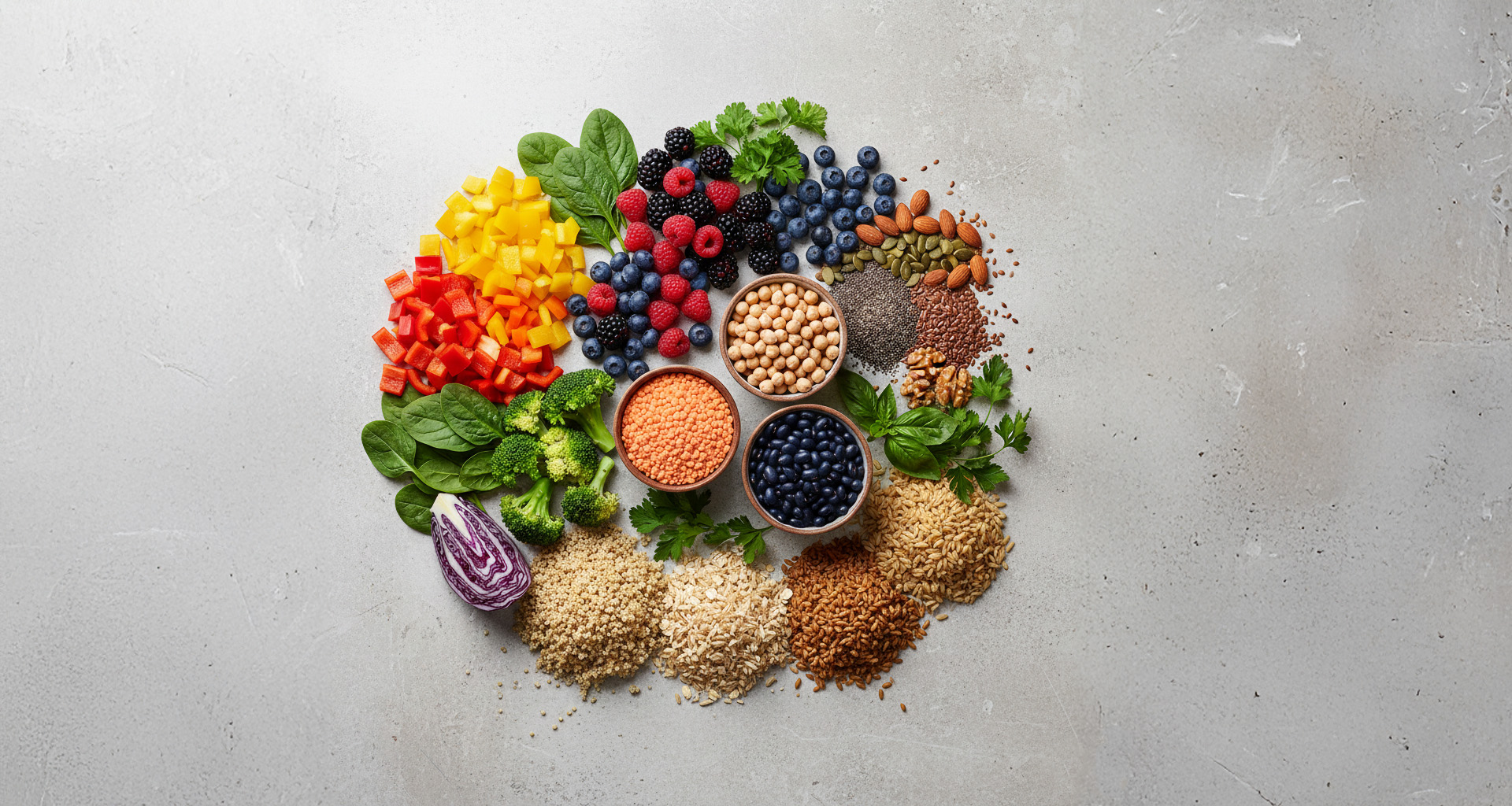
Recent microbiome research highlights a practical goal: aim to eat 30 or more different plant foods each week. This number comes from large-scale studies showing a strong link between plant food variety and greater microbiome diversity in real-world populations. It’s not about exotic ingredients or complicated rules just rotating a variety of vegetables, fruits, whole grains, legumes, nuts, seeds, and herbs, and switching them up weekly.
Hitting 30 plant foods a week might sound challenging, but it’s simpler than it seems.
A handful of mixed nuts could count as four or five, and a stir-fry with a variety of vegetables, paired with brown rice and lentils, can add up to eight or ten in a single meal. The aim isn’t perfection, it’s about gradually adding variety to your diet. Recent microbiome research highlights the benefits of eating 30 or more different plant-based foods each week, showing a strong link between variety and a healthier, more diverse gut microbiome.
This isn’t about exotic ingredients or complicated diets. It’s as straightforward as rotating through vegetables, fruits, whole grains, legumes, nuts, seeds, and herbs, intentionally mixing up your choices week by week. Hitting 30 plant foods a week sounds like a lot until you start counting. The categories below show how quickly variety adds up:
- Vegetables: Spinach, kale, arugula, broccoli, cauliflower, Brussels sprouts, carrots, beets, sweet potato, zucchini, eggplant, bell peppers, red cabbage, celery, asparagus, artichoke, leeks, fennel, bok choy, and Swiss chard.
- Fruits: Apples, pears, berries (blueberries, raspberries, blackberries, and strawberries each count separately), bananas, mango, kiwi, oranges, grapefruit, pomegranate, figs, avocado, and stone fruits like peaches and cherries.
- Whole Grains: Oats, brown rice, farro, quinoa, barley, bulgur, buckwheat, millet, whole wheat, rye, and whole kernel corn.
- Legumes: Lentils, chickpeas, black beans, kidney beans, cannellini beans, edamame, split peas, mung beans, and pinto beans.
- Nuts: Almonds, walnuts, cashews, pistachios, pecans, Brazil nuts, hazelnuts, and macadamia nuts.
- Seeds: Flaxseed, chia seeds, hemp seeds, pumpkin seeds, sunflower seeds, sesame seeds, and poppy seeds.
- Herbs and Spices: Garlic, onion, shallots, fresh parsley, cilantro, basil, ginger, turmeric, rosemary, and thyme.
Practical Tips for Getting More Fiber the Right Way
Incorporating more fiber diversity into your daily meals doesn't require a complete overhaul of your cooking or shopping habits. It begins with noticing repetition and making small changes.
Try swapping white rice for farro, adding chickpeas to a simple salad, or choosing a different leafy green. Other helpful habits include opting for whole fruits over juice, which lacks fiber, and using frozen fruits and vegetables as often as fresh ones. Produce is flash-frozen at its peak ripeness, retaining its full fiber content and nutritional value, while offering greater convenience.
These small, consistent adjustments can significantly benefit your gut microbiome when practiced regularly.

Fiber Mixing Is the Real Trend Worth Following
The best way to boost your fiber intake isn’t about obsessively counting grams. Instead, it’s about following what researchers and nutritionists have long suggested: eating a diverse range of whole plants. Focusing on “fiber diversity” rather than sheer quantity is a more effective way to support your gut microbiome.
To really benefit from fiber, we need to shift the focus from how much we eat to how varied our sources are. Your gut bacteria will thank you.
Incorporating fiber diversity into your diet doesn’t require a complete revamp of your cooking or shopping habits. It starts with avoiding repetition. If you find yourself eating the same five foods week after week, try rotating in some alternatives. Swap white rice for farro, add chickpeas to a salad with just one or two vegetables, or experiment with a new leafy green. These small changes can gradually reshape your gut’s microbial community.
Fibermaxxing is not a bad idea
Consistent, simple adjustments can have a meaningful impact when your microbiome regularly gets the right nutrients.
The instinct behind "fibermaxxing" is right. Most people genuinely need more fiber, and making it a mainstream wellness topic is a net positive. But the version worth adopting is one that prioritizes variety over volume and understands the gut needs time to adapt. Aiming for 30 different plants a week is a more meaningful target than any single gram count. That isn't a trend it's just how the gut works.