
As the United States nears its 250th anniversary, it's worth considering how much the American diet has changed and what that shift means for our gut microbes.
In 1776, most Americans ate what we would now call a "gut-friendly" diet: whole grains, legumes, seasonal vegetables, and meals made from scratch. Their fiber intake was significantly higher than ours today. Long before the discovery of the microbiome, the agricultural habits of early Americans unintentionally created one of the most fiber-rich diets in history.
The Founding Era Diet: Accidentally Perfect for Gut Health
Thomas Jefferson is remembered as a statesman and inventor, but he was also an adventurous gardener. His estate grew dozens of fruit and vegetable varieties, creating a level of dietary diversity that modern microbiome research now recognizes as ideal. Though the concept wouldn't exist for another two centuries, his diet would have easily met today's "30 different plants per week" standard.
The founding era diet wasn't perfect. Without refrigeration, foodborne pathogens and intestinal infections were common. Dietary variety also dropped sharply in winter. Still, the everyday foods of 18th-century Americans supported gut health in ways we are only now beginning to understand.
The Foods That Built America (and Still Support the Gut Today)
Several foods were so foundational to the early American diet that they shaped the nation's agricultural and culinary identity. Modern microbiome science reveals why these foods were vital not just for survival, but for health at a cellular level.
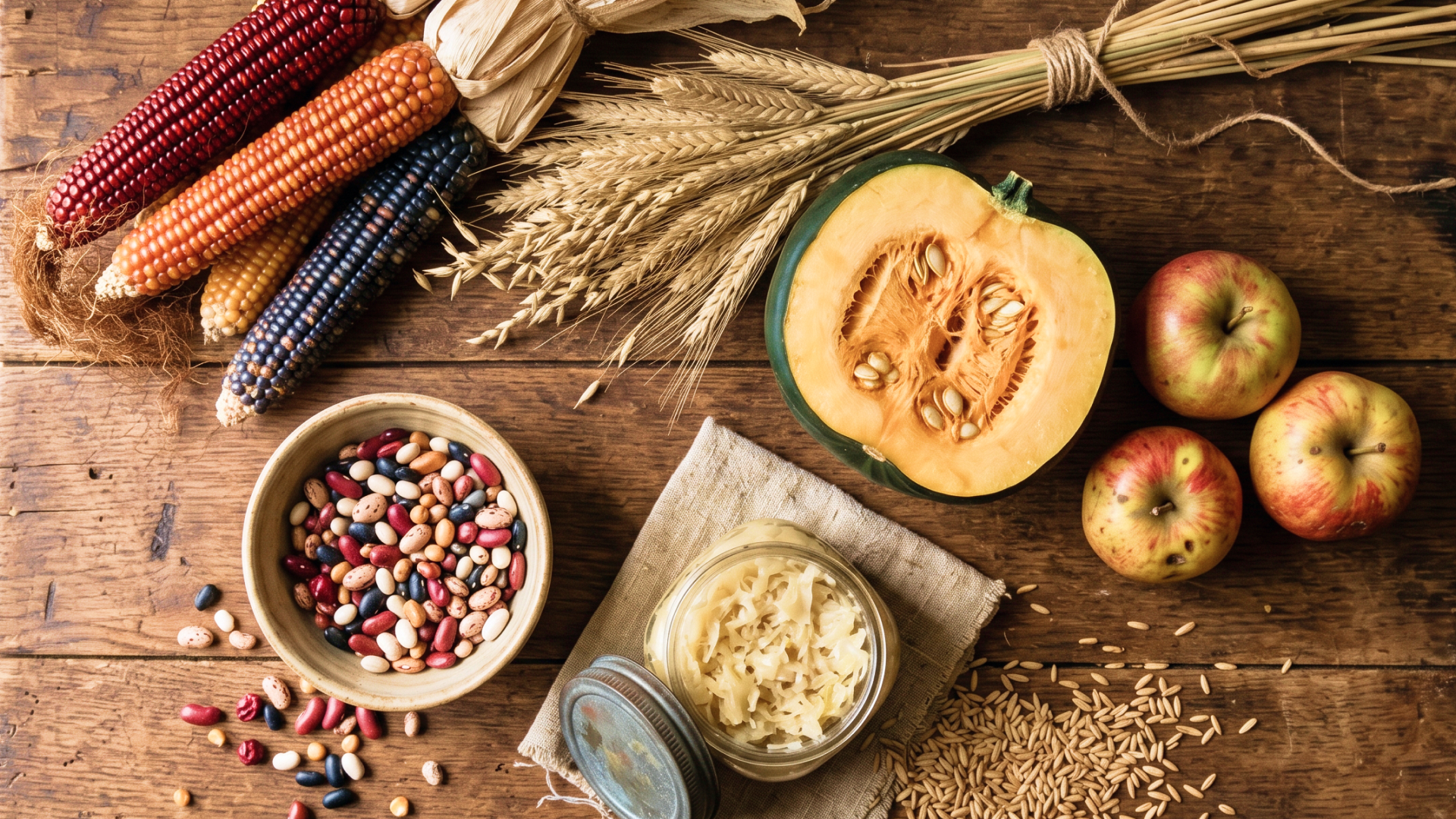
- Corn: cultivated by Indigenous peoples for thousands of years, became a staple for colonists due to its productivity and storability. Traditional preparations of corn retained far more fiber and resistant starch than modern products. Gut microbes ferment these compounds into short-chain fatty acids, which protect the gut lining and reduce inflammation.
- The Three Sisters: (corn, beans, and squash) represent a sophisticated agricultural system developed by Indigenous farming communities. Planted together, they created a mutually supportive ecosystem. This agricultural brilliance was also nutritional brilliance. The combination provided complementary amino acids, diverse dietary fibers, vitamins, and minerals centuries before nutrition science could explain why.
- Oats, rye, barley, and whole wheat: were daily staples long before boxed breakfast cereals. Intact whole grains contain both soluble and insoluble fiber, feeding a wider range of gut bacteria than their refined counterparts.
- Apples: became embedded in American food culture, partly because they stored well through winter, a critical trait before refrigeration. Apples are rich in pectin, a soluble fiber that ferments in the colon and feeds beneficial bacteria.
- Fermented foods: were arguably the most gut-supportive feature of early American eating, even if unintentionally. German settlers brought sauerkraut, Jewish immigrants popularized fermented pickles, and Eastern European communities expanded vegetable fermentation. Developed for preservation, these foods used live bacterial cultures to extend the life of vegetables and dairy, quietly delivering what we now call probiotics to the American table.
What Changed
Food in America is now safer, more convenient, and more abundant than ever before. While these are significant achievements, the past century of food processing has also stripped away many of the elements that once supported gut health.
Refining grains removes fiber and bran. Pasteurization and refrigeration, while crucial for safety, have diminished the role of fermentation. Additives designed to extend shelf life can alter the gut's microbial environment. Most significantly, the rise of ultra-processed foods (products reconstituted from broken-down ingredients) has fundamentally changed the daily inputs our gut microbiomes receive.
The consequences are clear. Today, about 95% of Americans do not get the recommended daily amount of fiber.
The average American's gut microbiome is less diverse than that of previous generations, and chronic conditions linked to gut dysbiosis, such as inflammation and metabolic disease, have become major health challenges.
What We Can Learn
Modern microbiome research often leads to familiar advice: eat a wide variety of whole plant foods, include fermented items, and choose fiber from intact sources rather than additives. This isn't new information; it's a description of how many Americans ate before industrialization changed our food systems.
The gut microbiome co-evolved with humans over thousands of years, shaped by available foods.
The rapid dietary shifts of the last century have outpaced this evolutionary relationship, with consequences we are only now beginning to understand. We are learning that the wisdom in traditional food cultures (from the Three Sisters crops of Native American agriculture to the sauerkraut barrel of European settlers) held real biological value.
The most important question for the future of American health may not be about discovering the next superfood. Instead, it might be about understanding what was already working, why it worked, and how to carry that wisdom forward.
References and Appendix
USDA National Agricultural Library: The Three Sisters: https://www.nal.usda.gov/collections/stories/three-sisters