
Is your breakfast cereal ultraprocessed? What about your favorite yogurt, or a loaf of whole-grain bread?
Ultraprocessed foods (UPFs) have become the latest villains in nutrition headlines. They have been linked to obesity, diabetes, cardiovascular disease, and a growing list of other health concerns. Research also suggests they may disrupt our gut microbiome.
But here is the surprising part: scientists still disagree about exactly what makes a food ultraprocessed. And not everything that falls into this category is necessarily bad for you.
So, what should we believe? And, more importantly, what should we put in our grocery cart?
From Home Cooking to Food Engineering
Humans have been processing food for thousands of years. Grinding wheat into flour, baking bread, fermenting yogurt, and preserving vegetables are all forms of food processing.
Processing has made food safer, more accessible, and easier to store. There is nothing inherently unhealthy about it.
But modern industrial food manufacturing has taken processing to a new level. Instead of simply preserving or preparing ingredients, manufacturers can break foods into individual components, modify them, and recombine them with additives to create products that are inexpensive, convenient, visually appealing, and exceptionally tasty.
Some of these products are designed to make us want another bite, and then another.
This transformation prompted a Brazilian researcher to ask a question that changed nutrition science: what if the way food is manufactured matters as much as the nutrients it contains?
Meet NOVA: The Classification That Started It All
Beginning in 2009, Brazilian epidemiologist Carlos Augusto Monteiro and colleagues at the University of São Paulo introduced a new way to think about food.
Instead of classifying foods primarily by calories, fat, sugar, or vitamins, they proposed considering the extent and purpose of industrial processing.
Their work evolved into the NOVA classification, which divides foods into four groups:
The fourth category attracted the most attention.
Today, ultraprocessed foods provide more than half of the calories consumed in the United States (about 55%, according to the most recent national survey data). Numerous studies have found that people who consume more UPFs tend to have poorer health outcomes.
But the NOVA system is not without ambiguities.
The Curious Case of Whole-Grain Bread
Consider two loaves of whole-grain bread. One is made with whole-wheat flour, water, yeast, and salt. Under NOVA, it is classified as a processed food. The other contains the same basic ingredients, but the manufacturer adds an emulsifier to improve texture and extend shelf life. Under NOVA, this loaf may be classified as ultraprocessed. Yet the two breads could have nearly identical amounts of fiber, protein, sugar, and calories.
Does the presence of one additive make the second loaf significantly less healthy?
This distinction has been challenged by food manufacturers and some nutrition scientists, who argue that NOVA can place nutritious foods in the same category as sugary soft drinks and candy. The criticism raises an important question: should the presence of a single industrial ingredient determine whether a food is considered unhealthy? The issue is particularly relevant for whole-grain breads, breakfast cereals, and yogurts. Some are classified as ultraprocessed despite providing valuable nutrients and fitting into healthy dietary patterns. Of course, the opposite is also true. A food made at home with familiar ingredients is not automatically nutritious. A homemade dessert loaded with sugar and saturated fat may be less healthy than a commercially produced, fiber-rich breakfast cereal. The lesson? Processing matters, but nutritional quality matters too.
A Practical Proposal From Duke University
In 2026, a national panel of 14 experts convened by Healthy Eating Research, a program based at Duke University, proposed a more practical way to define UPFs for public health policy. Their approach retains NOVA as its scientific foundation but makes classification more transparent.
First, identify products containing ingredients characteristic of ultraprocessed foods, such as:
- Cosmetic additives, including certain flavors, colors, emulsifiers, and thickeners.
- Ingredients not normally used in home kitchens, such as high-fructose corn syrup.
Then comes an important refinement: exempt products that meet the FDA's criteria for "Healthy," with one exception. Products containing non-sugar sweeteners would not qualify for the exemption. To qualify, a food must contain meaningful amounts of recommended food groups and stay within specified limits for added sugar, saturated fat, and sodium. This would help avoid treating nutritious products, such as some whole-grain breads, breakfast cereals, tofu, and yogurts, the same way as candy and sugary soft drinks. The Duke panel's approach recognizes that we need to consider both how food is manufactured and what it contributes to our diet.
It is a proposal for public policy rather than a new official classification, but it offers a useful perspective for everyday food choices.
Why Should Your Gut Care?
At Coprata, we are particularly interested in what happens after food passes through the stomach and reaches the intestines. Your gut is home to trillions of microorganisms. Many of them thrive on dietary fibers and other compounds from plant foods that escape digestion in the small intestine. As gut bacteria ferment these substances, they produce short-chain fatty acids (SCFAs), including acetate, propionate, and butyrate. These compounds help support the intestinal environment and play important roles in gut and metabolic health. A diet dominated by ultraprocessed foods can interfere with this ecosystem in several ways.
1. Less fiber means less food for your microbes.
Many UPFs are made with refined ingredients and contain relatively little fermentable fiber. When these foods displace vegetables, fruits, legumes, and whole grains, beneficial gut bacteria lose an important source of nourishment.
2. Some additives may affect the microbiome.
Research suggests that certain emulsifiers, sweeteners, and other additives can alter microbial communities or intestinal function. Much of this evidence comes from laboratory and animal studies, however, and the effects in humans are still being investigated. Not all additives behave the same way.
3. UPFs can encourage overeating.
In a controlled National Institutes of Health study, participants eating an ultraprocessed diet consumed approximately 500 additional calories per day compared with when they ate a minimally processed diet, even though the meals offered were matched for several nutritional characteristics. This does not mean every UPF causes overeating, but it highlights how food formulation and eating behavior can influence health.
4. Gut health may be part of the connection to chronic disease.
Diets high in UPFs have been associated with inflammatory bowel disease and other gastrointestinal conditions. Scientists are exploring whether changes in the microbiome, intestinal barrier, and inflammation help explain these links. The evidence is compelling enough to warrant attention, although researchers have not yet established precisely how much of the risk comes from processing itself, individual additives, or the overall nutritional quality of the diet.
A Smarter Way to Shop: Start With the Perimeter
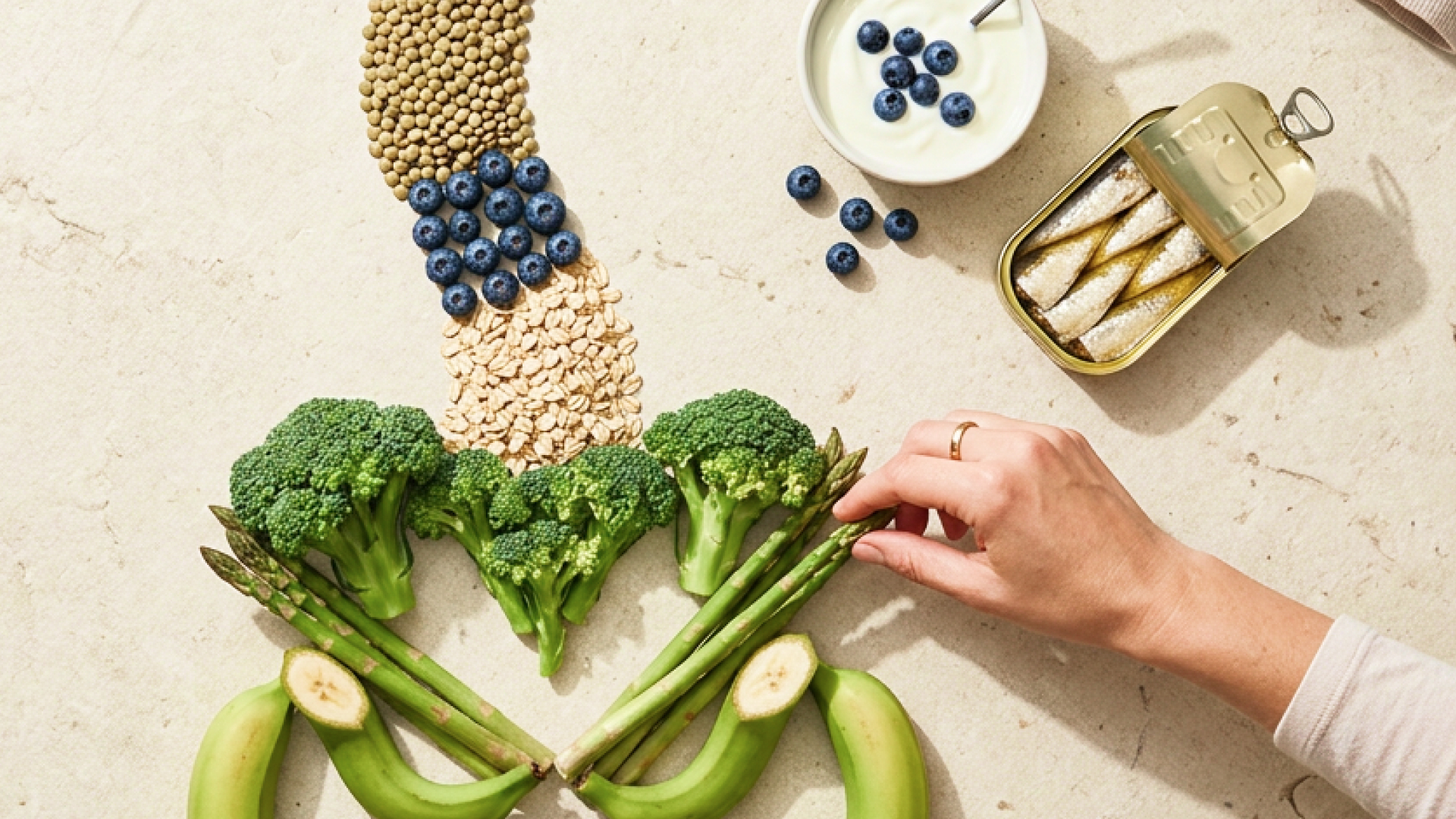
Here is a simple strategy for your next grocery trip: shop the perimeter first, then visit the center aisles with a purpose. In many supermarkets, the outer aisles contain fresh produce, dairy products, eggs, meat, and other relatively minimally processed foods. The center aisles tend to contain more packaged products, including chips, cookies, sugary cereals, candy, and soft drinks. But the center of the supermarket is not forbidden territory! It is also where you can find canned beans, lentils, oats, brown rice, nuts, frozen vegetables, and other convenient, nutritious foods. The goal is not to avoid packages. It is to become more selective about what is inside them.
Three Simple Habits for a Less-Ultraprocessed Diet
1. Read the ingredient list, not just the front of the package.
A product advertised as "natural," "high protein," or "low fat" may still contain substantial added sugar or other ingredients characteristic of UPFs. Look at the Nutrition Facts panel too.
2. Make easy swaps rather than dramatic changes.
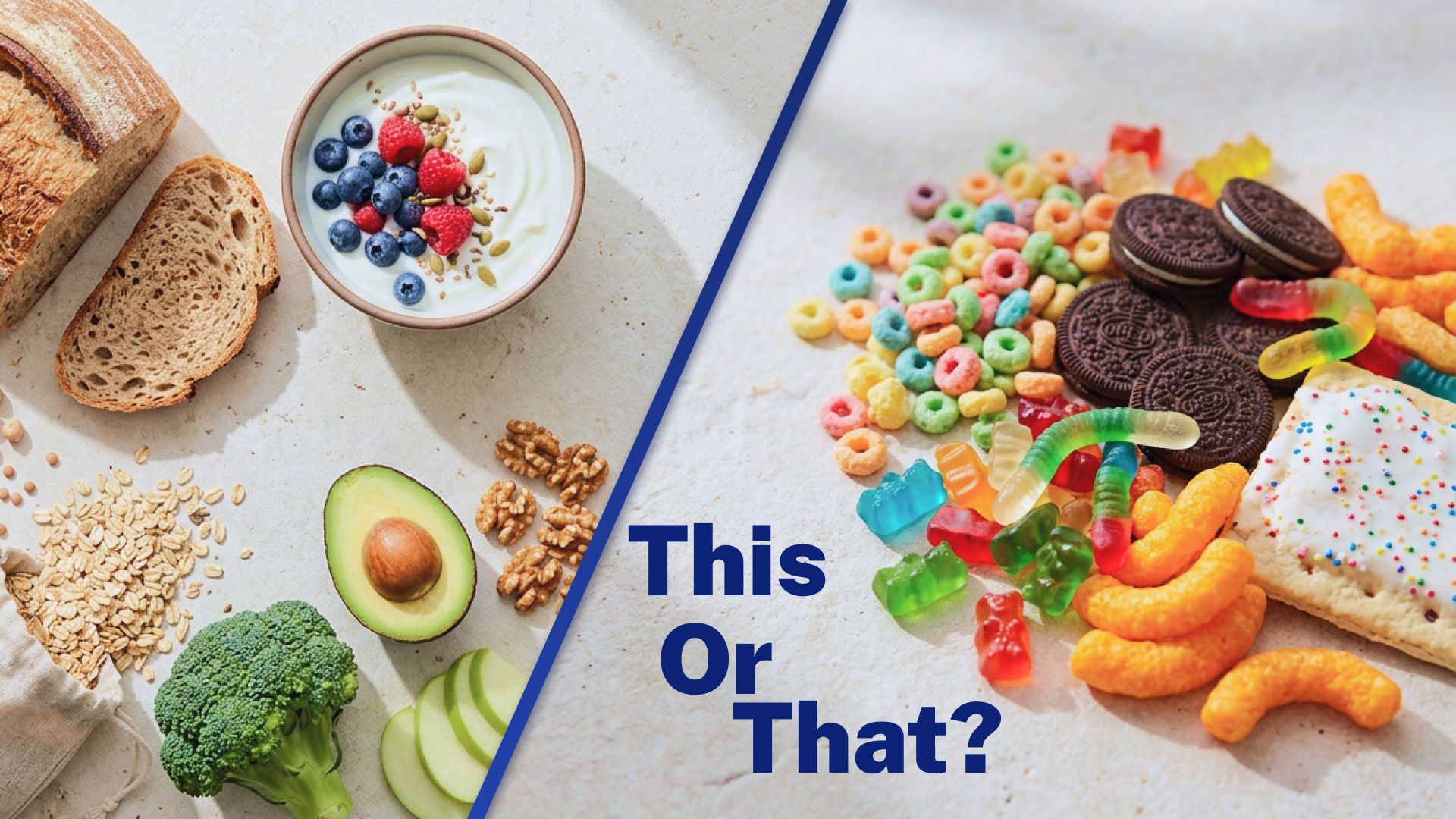
Try plain yogurt with fruit instead of a heavily sweetened dessert yogurt. Choose oatmeal with nuts and berries instead of a sugary breakfast cereal. Replace some packaged snacks with fruit, nuts, or hummus.
3. Do not confuse convenience with poor nutrition.
Frozen vegetables, canned beans, and prewashed salads can make healthy eating easier. Some processed foods are affordable, practical, and nutritious.
Your Gut Can Tell You Something About Your Diet
Your gut microbiome responds to what you eat, including the fibers and other compounds that reach your colon. One way to observe aspects of this activity is through fecal pH, a marker influenced in part by microbial fermentation and the production of short-chain fatty acids. At Coprata, we developed the Microbiome Activity Tracker (MAT) to make this measurement accessible at home. MAT does not measure how much ultraprocessed food you eat, nor can it diagnose an unhealthy microbiome. But repeated fecal pH measurements can help you observe changes in a marker associated with gut microbial activity as you modify your diet and lifestyle. For example, what happens when you replace some refined snacks with fiber-rich foods, or start eating a greater variety of plants? Your gut may respond, and tracking over time can help you explore those changes.
The Bottom Line: Less Ultraprocessed, More Real Food
The science of ultraprocessed foods is evolving. NOVA gave researchers a powerful new way to study the modern food environment, and newer approaches are helping refine how we distinguish foods that deserve caution from those that can be part of a nutritious diet. Meanwhile, one practical conclusion is already clear: eating more minimally processed, fiber-rich foods and fewer nutrient-poor ultraprocessed products is a sensible foundation for a gut health diet, and for your overall health. You do not need to turn your kitchen into a laboratory, eliminate every packaged food, or give up your favorite whole-grain bread. Start with small changes, stay curious, and give your gut microbes something good to work with.
References
- Monteiro CA, Levy RB, Claro RM, Castro IR, Cannon G. A new classification of foods based on the extent and purpose of their processing. Cadernos de Saúde Pública. 2010;26(11):2039-2049.
- Williams AM, Couch CA, Emmerich SD, Ogburn DF. Ultra-processed food consumption in youth and adults: United States, August 2021-August 2023. NCHS Data Brief. 2025;(536).
- Lott ME, Taillie LS, Krieger J, Reed L, Ananthan S, D'Angelo Campos A, Story M. Ultraprocessed Foods in the U.S.: Recommended Definitions and Policies. Durham, NC: Healthy Eating Research; 2026.
- Hall KD, Ayuketah A, Brychta R, et al. Ultra-processed diets cause excess calorie intake and weight gain: an inpatient randomized controlled trial of ad libitum food intake. Cell Metabolism. 2019;30(1):67-77.e3.
- Whelan K, Bancil AS, Lindsay JO, Chassaing B. Ultra-processed foods and food additives in gut health and disease. Nature Reviews Gastroenterology & Hepatology. 2024;21(6):406-427.