
Stronger bones are key to living more healthy years. And while we often think of bone health in terms of calcium and vitamin D, emerging research suggests that our gut microbiome may also have an important role to play.
Osteoporosis is a condition in which bones become less dense and their internal structure deteriorates, making them more fragile and susceptible to fractures. It is often called a silent disease because bone loss can progress for years without noticeable symptoms.
Age, genetics, sex, and hormonal changes all influence bone health. In fact, research suggests that genetic factors may account for 50 to 90% of variation in bone mass, depending on age, sex, and skeletal location. Osteoporosis affects women twice as often as men, with postmenopausal women facing particularly heightened risk due to estrogen deficiency and age-related bone loss.
The good news? Not everything about bone health is determined by our genes.
Up to 50% of bone mass may be attributed to nongenetic factors: diet, physical activity, and smoking are among the lifestyle factors we can control. And although osteoporosis is most often diagnosed later in life, building and maintaining strong bones is a lifelong investment.
Your Bones Are Living Tissue
We often think of bones as rigid, unchanging structures. In reality, bones are living tissue, constantly being broken down and rebuilt. Specialized cells called osteoclasts break down old bone, while osteoblasts build new bone. This continuous process, known as bone remodeling, helps maintain bone strength and repair everyday wear and tear.
During childhood and early adulthood, bone formation generally exceeds bone breakdown, allowing us to build bone mass. As we age, and particularly after menopause, bone loss can outpace bone formation.
The goal is therefore twofold: build strong bones early in life and preserve bone density for as long as possible. Nutrition is essential to both.
The Surprising Connection Between Gut Health and Strong Bones
For decades, bone health research focused primarily on nutrients such as calcium, vitamin D, and protein. More recently, scientists have begun exploring another important player: the gut microbiome.
The trillions of microorganisms living in our digestive tract do much more than help digest food. They produce biologically active compounds that can influence metabolism, inflammation, nutrient absorption, and potentially bone remodeling.
One particularly interesting connection involves short-chain fatty acids (SCFAs), compounds produced when gut bacteria ferment dietary fibers.
Research suggests that these microbial metabolites may support bone health through several mechanisms:
- Improving calcium absorption: Fermentation lowers the pH of the intestinal environment, potentially increasing calcium availability and absorption.
- Influencing bone remodeling: SCFAs may affect the activity of bone-building and bone-resorbing cells.
- Supporting immune regulation: Microbial metabolites help regulate immune and inflammatory pathways that may influence bone metabolism.
Other microbiome-related pathways, including serotonin signaling, are also being investigated for their potential role in bone health. This emerging field is sometimes called the gut-bone axis: the biological connection between our gut microorganisms and our skeleton. And researchers have identified an intriguing way to explore this relationship: measuring the pH of stool.
Can Stool pH Tell Us Something About Bone Health?
Bone mineral density (BMD) is one of the most important measurements used to evaluate bone strength and osteoporosis risk. It is typically measured using a specialized imaging test called DXA (dual-energy X-ray absorptiometry), which measures bone mineral density at sites such as the hip and spine. DXA is an established tool for diagnosing osteoporosis and assessing fracture risk. However, it requires specialized equipment and is generally performed periodically, rather than as part of everyday health monitoring.
Could a much simpler measurement provide clues about biological processes associated with bone health?
A fascinating study published in The Journal of Nutrition in 2021 suggests that it might.
What Researchers Discovered
Researchers from the USDA and the University of California, Davis, analyzed data from 313 healthy adults, ages 18 to 66, representing different ethnic backgrounds. The study examined a wide range of factors, including age, sex, body composition, dietary habits, physical activity, blood biomarkers, and stool pH.
Researchers compared these measurements with bone mineral density and bone mineral content measured at three skeletal locations: the whole body, femoral neck (hip), and spine. They used statistical and machine-learning approaches to identify which characteristics were most informative about bone health.
One of the most intriguing findings was that lower stool pH was associated with higher bone mineral density and bone mineral content.
The researchers also found differences between men and women. Among women, lower stool pH was significantly associated with higher femoral neck bone mineral density, while no significant associations were found among men when analyzed separately.
These findings are interesting, but they require careful interpretation. This was an observational analysis, and the study did not establish that lowering stool pH improves bone density or prevents osteoporosis. Nevertheless, stool pH emerged as a potentially informative marker of a biological process that deserves further investigation.
Why Would Stool pH Be Related to Bone Density?
The possible explanation brings us back to dietary fiber and gut bacteria.
When gut microorganisms ferment certain fibers, they produce short-chain fatty acids such as acetate, propionate, and butyrate. These compounds make the intestinal environment more acidic. Some of this change may be reflected in fecal pH, making stool pH a potential indirect indicator of microbial fermentation activity.
Why might this matter for our bones?
Earlier research has shown that consuming certain prebiotic fibers can increase intestinal calcium absorption. In some studies, fiber supplementation has also been associated with lower stool pH, higher SCFA concentrations, reduced calcium excretion, or changes in markers of bone formation.
Taken together, these findings suggest a plausible biological connection:
Dietary fiber → Gut microbial fermentation → Short-chain fatty acids → Changes in intestinal pH and calcium absorption → Potential benefits for bone health.
Importantly, fecal pH is not a direct measurement of SCFA production or calcium absorption, and it is influenced by other factors as well.
The 2021 study offers evidence supporting the gut-bone connection, but more research, particularly dietary intervention studies, is needed to establish whether changes in fecal pH can predict improvements in bone health.
What Should You Eat? Foods for Gut Health and Stronger Bones
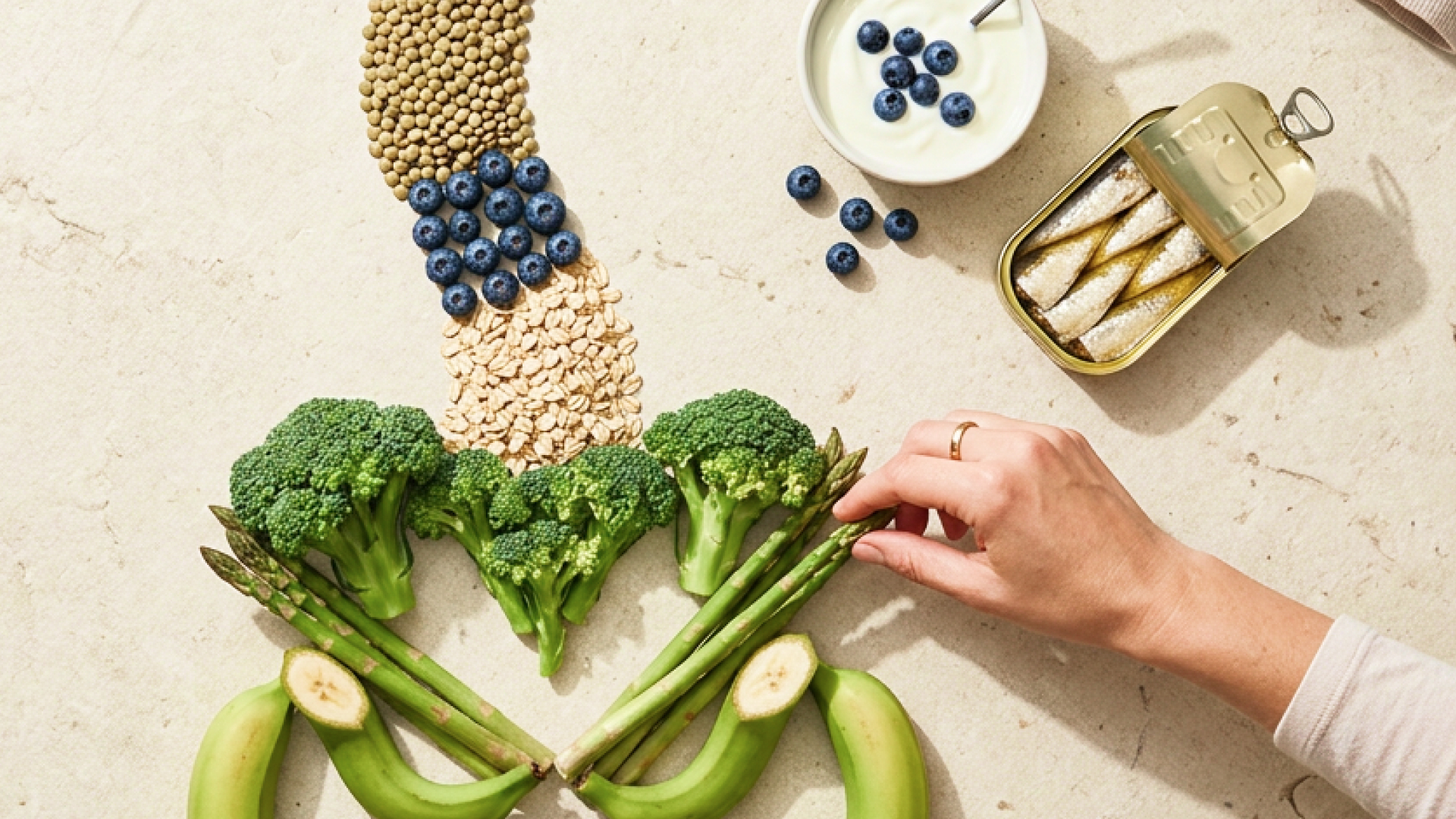
The encouraging news is that many foods that support bone health also nourish a healthy gut microbiome. Here are four important components of a bone-friendly diet.
1. Dairy Products: Calcium, Protein, and More
Dairy products are among the most familiar foods associated with bone health, and for good reason.
Milk, yogurt, and cheese provide calcium, phosphorus, and high-quality protein, all essential components of healthy bones. Many dairy products also provide vitamin D when fortified. Depending on age and nutritional needs, dietary recommendations commonly call for approximately three cup-equivalents of dairy per day.
Fermented dairy products, such as yogurt and kefir, may offer additional benefits (though fermented does not always mean probiotic). Products containing live microorganisms can contribute to the diversity of microbes and microbial activity in our digestive system, although their specific effects on bone health are still being studied.
What if you are lactose intolerant?
You do not necessarily need to eliminate dairy. Lactose-free milk and fermented products such as yogurt and kefir are often better tolerated, although individual tolerance varies. For people who avoid dairy altogether, fortified soy milk and calcium-set tofu are valuable alternatives. Soy foods can supply high-quality plant protein, and fortified varieties can help meet calcium needs.
2. Protein: The Building Blocks of Bone
Calcium gets much of the attention, but bones need protein too. Protein provides amino acids required to build the organic framework of bone, particularly collagen. It also helps preserve muscle mass, which is essential for balance, mobility, and reducing the risk of falls.
Adequate protein intake becomes especially important as we age. For many healthy older adults, expert recommendations suggest approximately 1.0 to 1.2 grams of protein per kilogram of body weight per day, although individual requirements vary with health status and activity level.
Good protein sources include fish, poultry, eggs, dairy, soy products, beans, and lentils. Fatty fish such as salmon and sardines offer additional nutrients. Sardines with edible bones are particularly rich in calcium, while fatty fish provide vitamin D and omega-3 fatty acids.
A combination of animal and plant proteins can help provide a broad range of nutrients that support bone and muscle health.
3. Fruits and Vegetables: More Than Just Vitamins
Fruits and vegetables are essential components of a bone-friendly diet. They provide potassium, magnesium, vitamin C, and a wide range of polyphenols that support normal cellular function and may help regulate inflammation. Vitamin C is particularly important for collagen formation, while magnesium contributes to normal bone structure.
Leafy greens, berries, citrus fruits, broccoli, and other colorful vegetables offer a variety of these nutrients.
Many fruits and vegetables also provide dietary fiber, including compounds that can be fermented by gut microorganisms.
The result is a double benefit: nutrients that support bone health directly and fibers that support the gut microbiome.
4. Whole Grains and Prebiotic Fibers: Feeding the Gut-Bone Connection
This is where the emerging research on stool pH becomes particularly interesting.
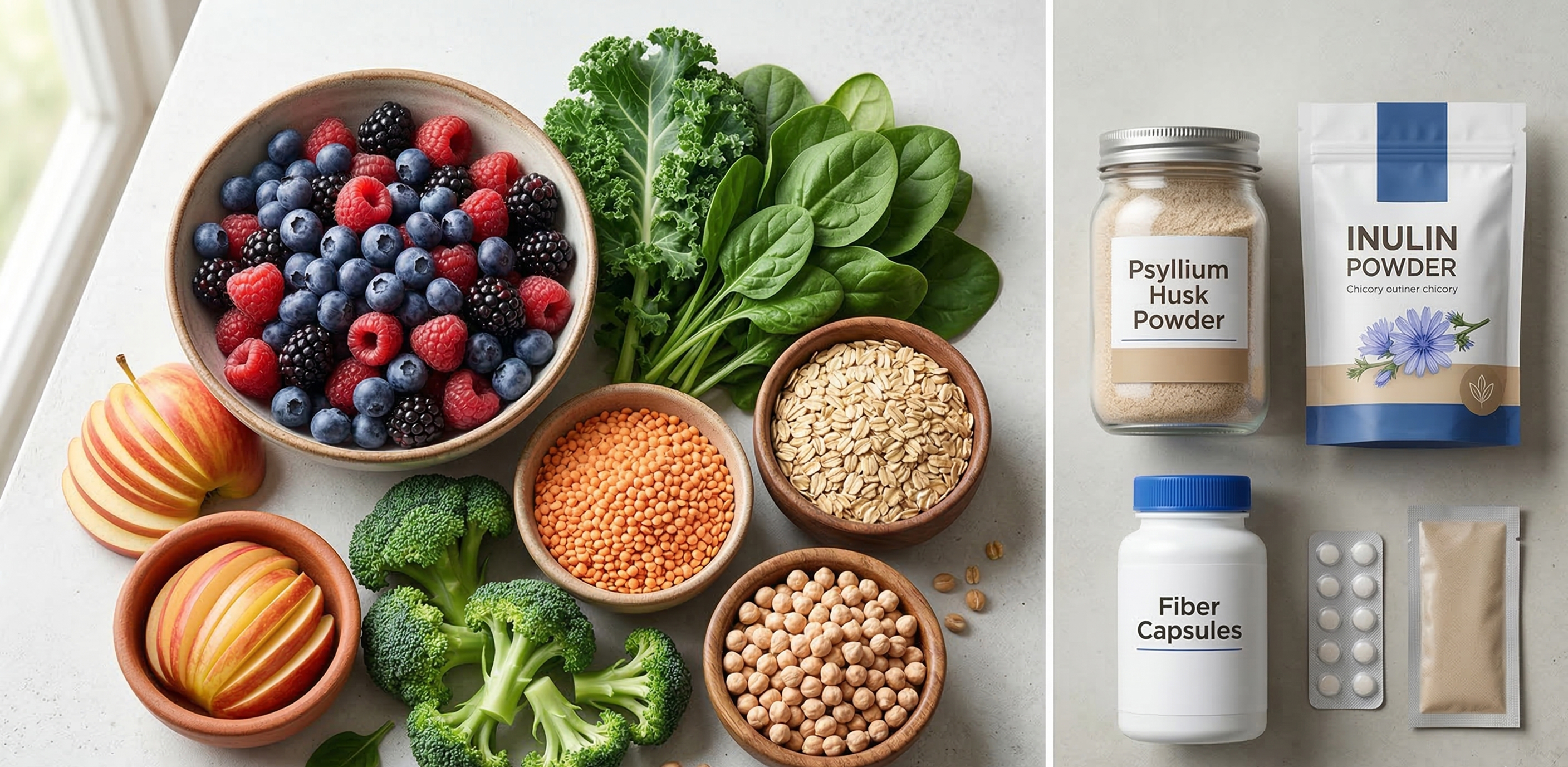
Whole grains, legumes, vegetables, and certain fruits provide fibers that our digestive enzymes cannot completely break down. Instead, some of these fibers reach the large intestine, where gut microorganisms ferment them and produce short-chain fatty acids.
This fermentation process may support calcium absorption while also influencing other pathways involved in bone metabolism.
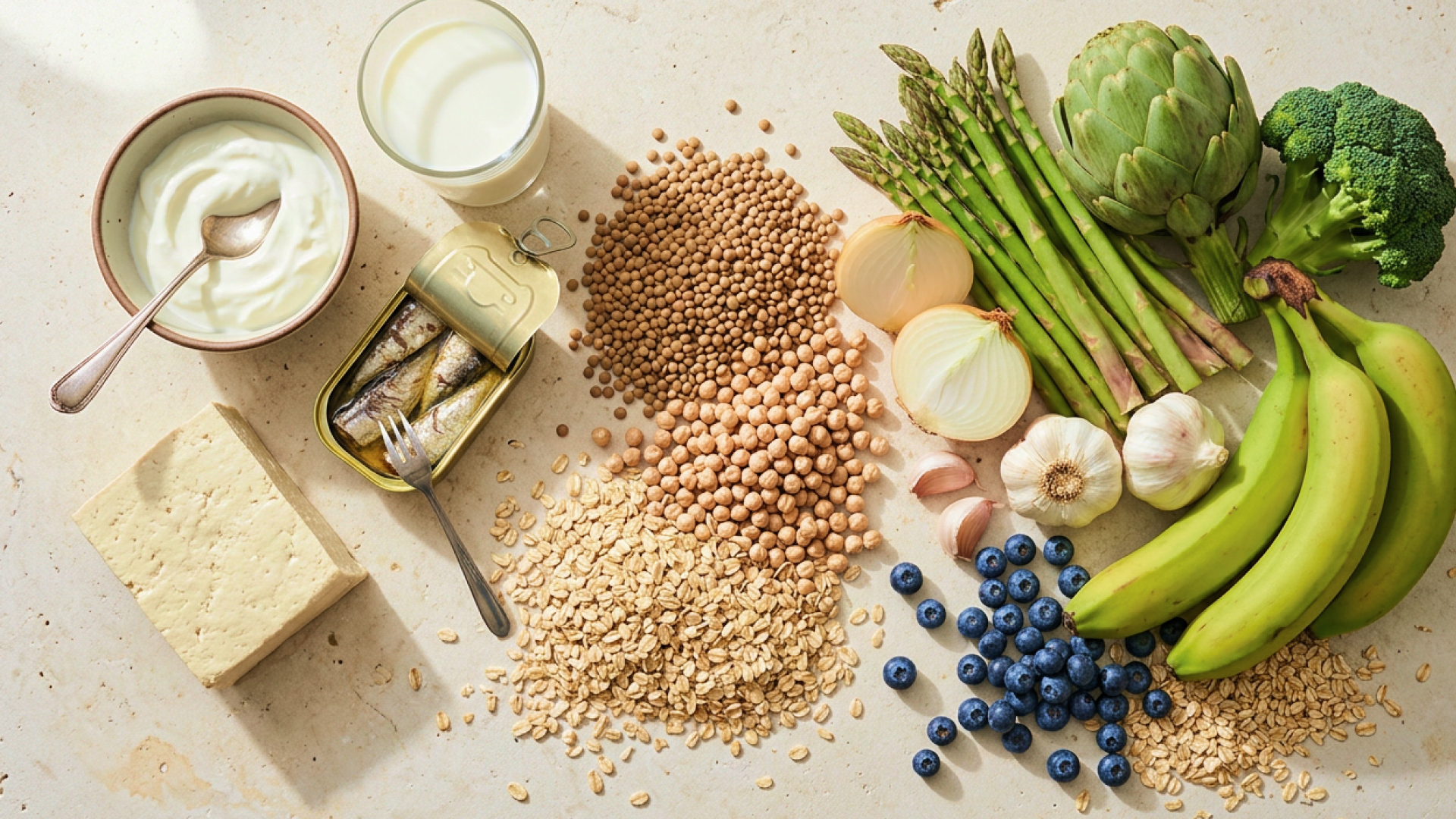
Foods that provide fermentable fibers include:
- Oats and barley
- Beans, lentils, and chickpeas
- Onions, garlic, and leeks
- Asparagus and artichokes
- Bananas, particularly less-ripe bananas
- Whole grains and other fiber-rich plant foods
Different fibers are fermented in different ways, so eating a variety of plant foods is a useful strategy for supporting a diverse and metabolically active gut microbiome. The key message is not simply to consume more calcium, but also to support the intestinal environment in which calcium is absorbed.
What Foods Should You Limit?
Just as some dietary patterns support bone health, others have been associated with poorer bone outcomes.
Research has linked diets high in refined grains, sugary soft drinks, fried foods, and processed meats with lower bone mineral density or increased fracture risk in some populations. These associations do not mean that an occasional serving of these foods will harm your bones.
Rather, your overall dietary pattern matters more than any single food.
A diet centered on nutrient-dense foods, adequate protein, calcium-rich choices, and a diversity of fiber-rich plants is a practical foundation for supporting both bone and gut health. Diet is only part of the picture. Weight-bearing exercise, resistance training, and avoiding smoking are also important for preserving bone strength.
The Takeaway: Your Gut and Your Bones May Be More Connected Than You Think
We have long known that nutrition plays a crucial role in maintaining healthy bones. What is changing is our understanding of how nutrition works.
The gut microbiome is emerging as an important intermediary between what we eat and how our bodies use nutrients. Microbial fermentation, short-chain fatty acid production, and changes in intestinal pH may all be part of this connection. The finding that lower fecal pH was associated with higher bone mineral density in a study of 313 adults adds another intriguing piece to this puzzle.
At Coprata, we are particularly interested in the potential of fecal pH as an accessible window into gut microbial activity. Our MAT kit is built around that measurement, so you can follow it over time.
A stool pH measurement cannot diagnose osteoporosis or replace a bone density scan. But understanding and tracking microbial activity may offer useful insights into how our gut responds to dietary and lifestyle changes. Strong bones are built over a lifetime. Nourishing your gut microbiome may be another reason to make fiber-rich, nutrient-dense foods part of your everyday routine.
References
- Zhang YW, Song PR, Wang SC, et al. Diets intervene osteoporosis via gut-bone axis. Gut Microbes. 2024;16(1):2295432.
- Chin EL, Van Loan M, Spearman SS, et al. Machine learning identifies stool pH as a predictor of bone mineral density in healthy multiethnic US adults. J Nutr. 2021;151(11):3379-3390.