

Why microbial products matter, from fermented foods to the MAT test
Fermented foods are often labeled "probiotic," but scientifically, the two terms are not interchangeable. Yogurt, kefir, sauerkraut, kimchi, kombucha, tempeh, and sourdough are all produced through microbial fermentation a process in which bacteria, yeasts, and molds transform the food, altering its chemistry, flavor, digestibility, and nutritional profile.
That process alone does not make a food probiotic.
"Probiotic" Has a Specific Scientific Meaning
Scientists widely define a probiotic as a live microorganism that gives the host a health benefit when taken in adequate amounts. Three conditions have to be true: the microorganism must be alive, it must be present in an adequate amount, and there must be evidence that it provides a health benefit. Containing microorganisms, or being made by them, is not enough on its own.
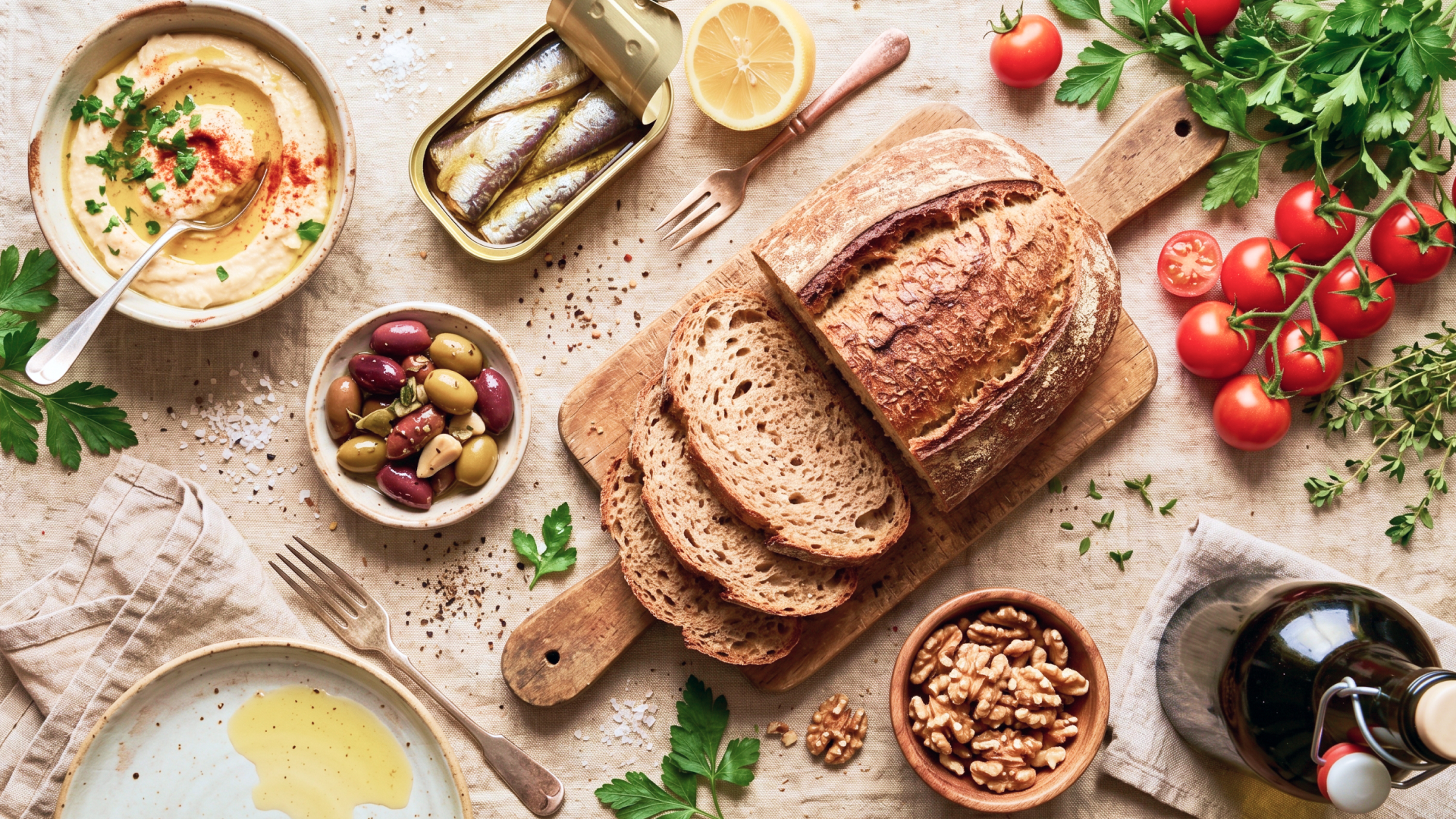
Sourdough bread shows the difference clearly. Sourdough fermentation depends on bacteria and yeast, but baking exposes those organisms to high temperatures and they generally do not survive. That makes sourdough a fermented food, but not a probiotic food.
The same principle applies to fermented foods that are pasteurized after fermentation. Pasteurization reduces or eliminates live microorganisms. The International Scientific Association for Probiotics and Prebiotics states that pasteurized fermented foods should not be described as containing probiotics simply because microbes were involved in making them.
Pasteurization Removes Live Microbes, Not Necessarily the Products of Fermentation
This does not mean pasteurized fermented foods have no nutritional or biological value.
During fermentation, microorganisms transform the original food. They consume sugars, modify proteins and carbohydrates, reduce certain compounds, and generate a wide variety of new molecules called metabolites. Many of these compounds remain in the food even after heat or pasteurization kills the microorganisms that produced them.
For consumers, this distinction leads to two separate considerations.
- If you specifically want live microorganisms, choose a product labeled as containing "live" or "active cultures" and check whether it was pasteurized after fermentation.
- If you prefer a pasteurized fermented food, you may still be eating a food whose chemistry has been substantially transformed by microbial activity.
Research increasingly recognizes that fermented foods may work through several mechanisms at once: the food matrix, live microbes when present, microbial cell components, and the molecules produced during fermentation.
The Metabolites Microbes Produce May Be as Interesting as the Microbes Themselves
This points to a broader idea in microbiome science. Knowing which microorganisms are present is not the same as knowing what they are doing. Microorganisms are biochemical factories. During fermentation, they convert nutrients into new compounds. Some of these metabolites can interact with the gut microbiota, the intestinal lining, the immune system, and host metabolism.
The same principle applies inside the large intestine. Gut microorganisms ferment dietary substrates, especially the carbohydrates and fibers that escape digestion in the small intestine. One important group of products is the short-chain fatty acids, including acetate, propionate, and butyrate.
These compounds are more than fermentation by-products. They take part in signaling pathways and can influence gut barrier function, immune regulation, and host metabolism.So we cannot understand microbiome function just by asking: Which bacteria are present?
We also need to ask: What are those bacteria producing?
What Does the Research Say About the Health Benefits of Fermented Foods?
Fermentation probably began as a way to preserve food, but many fermented foods are now thought to benefit human health, particularly gastrointestinal health.
Large observational studies have linked fermented dairy foods, especially yogurt, with better cardiometabolic outcomes. Meta-analyses report associations between higher intake of fermented dairy foods and lower risk of type 2 diabetes and cardiovascular disease. These studies cannot prove that fermented foods directly cause these benefits, but they add to the evidence that fermented foods can be part of a healthy diet.
Fermented foods are also not a single category with one proven effect. Yogurt, kefir, sauerkraut, kimchi, sourdough, and other fermented foods differ considerably in composition and preparation.
More research is needed, especially randomized controlled trials in humans that can clarify how these foods work. For people living with IBS, the evidence is inconsistent and has not been studied systematically. Even so, the evidence so far points to benefits for most people. The practical advice is to explore: introduce fermented foods gradually, choose ones you actually enjoy, and pay attention to how your digestive system responds.
From Fermented Foods to Your Own Gut Microbiome
This distinction closely parallels how we think about gut health at Coprata.
Many microbiome tests focus primarily on microbial composition: identifying the organisms present in a sample.
That information can be useful, but composition alone does not directly tell us how actively those microbes are fermenting dietary substrates or what chemical environment they are creating.
At Coprata, we are interested in microbiome activity and function.
MAT measures fecal pH, which reflects the chemical environment of the distal gut and is influenced in part by microbial fermentation and the production of organic acids.
When gut microbes ferment carbohydrates and fiber, they generate short-chain fatty acids and other organic acids. Greater production of these acids can contribute to a more acidic colonic environment, while reduced fermentation or different patterns of microbial metabolism can shift that environment in the opposite direction.
Fecal pH therefore provides a different type of information from sequencing.
Sequencing asks:
- Who is there?
- A functional marker like fecal pH begins to ask:
- What is the microbial community doing?
- Fermented foods teach the same lesson.
Whether we are looking at a jar of sauerkraut or the microbial ecosystem inside the human gut, the microorganisms are only part of the story. The microbes matter. What they produce matters too.
References
- Marco ML, Sanders ME, Gänzle M, et al. The International Scientific Association for Probiotics and Prebiotics (ISAPP) consensus statement on fermented foods. Nature Reviews Gastroenterology & Hepatology. 2021;18:196–208.
- Mukherjee A, Breselge S, Dimidi E, Marco ML, Cotter PD, et al. Fermented foods and gastrointestinal health: underlying mechanisms. Nature Reviews Gastroenterology & Hepatology. 2024;21:248–266.
- Stanford Medicine Nutrition. Fermenting the Facts: Myth Busting Fermented Foods.