
There are things your body cannot do on its own.
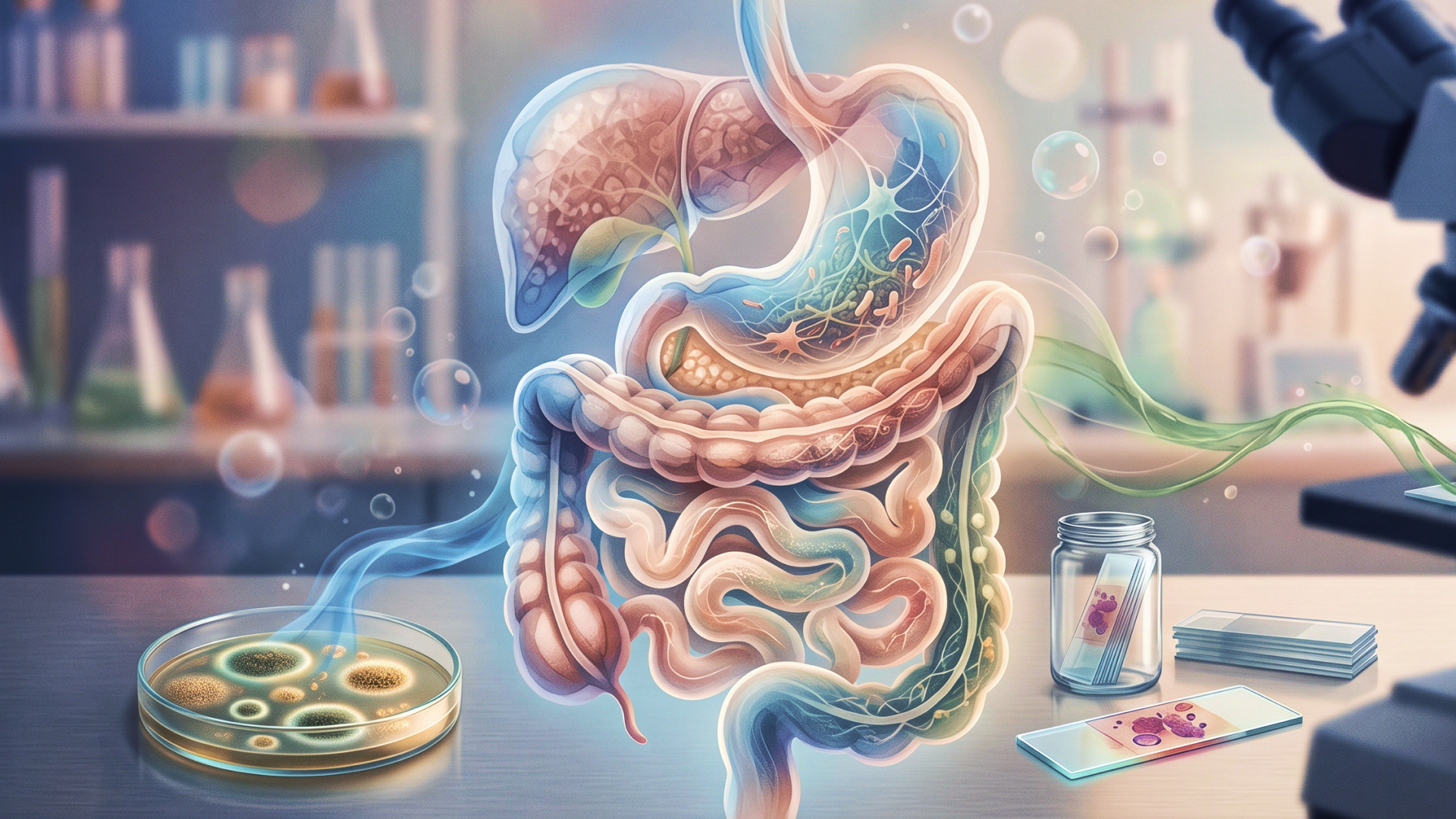
It cannot produce enough vitamin K without help from microbes. It cannot fully break down certain plant compounds without the right gut bacteria. And it cannot make short-chain fatty acids (SCFAs) at all. That job was never yours. In its long history, your body made a deal: it handed off some of its most critical chemistry to the microbes in your gut and trusted them to deliver.
They deliver SCFAs, and almost nothing about your day-to-day bodily functions happens without them.
A Function Your Body Outsourced Entirely
SCFAs are produced when gut bacteria ferment dietary fiber. Your body has no way to make them independently. If the bacteria aren't there, or if they aren't being fed the right things, production stops. There is no backup system.
This isn't a minor gap. SCFAs are the primary fuel for the cells lining your colon. They regulate the gut barrier, shape your immune system's response, and influence glucose and lipid metabolism. Research increasingly points to their roles in brain and lung function as well. These are foundational tasks, and your body handed all of them to an ecosystem of microbes you feed, or fail to feed, every day.
What Your Gut Actually Produces
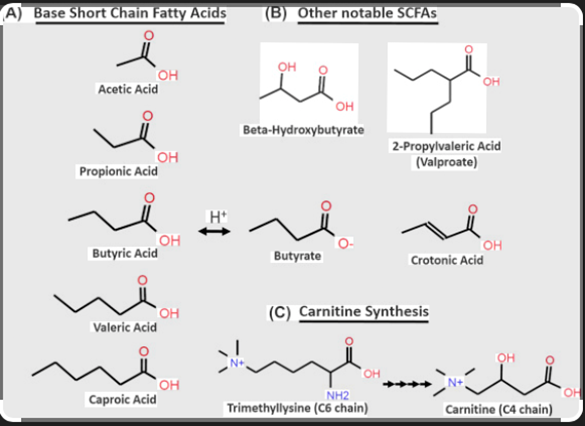
The three main SCFAs your microbiome delivers are acetate, propionate, and butyrate. Each has a distinct role.
Butyrate is consumed almost entirely by the cells lining your colon, serving as their primary energy source. It is central to maintaining the gut barrier—the structure that determines what gets absorbed into your bloodstream. Its anti-inflammatory effects are among the most well-documented in gut health research.
Propionate goes to the liver, where it helps produce glucose and contributes to the hormonal signals that tell your brain you're full. Acetate is the most abundant in the body, feeding into lipid and cholesterol metabolism.
In a healthy colon, the approximate molar ratio of acetate to propionate to butyrate is 60:20:20. This ratio isn't fixed; it shifts depending on what you eat, which bacteria are present, and how quickly food moves through your system. Changing the proportions has consequences. More acetate shifts the balance toward lipid synthesis. More propionate pushes toward glucose production. More butyrate strengthens the gut lining. The three work best in concert, and research shows that combinations of SCFAs produce stronger metabolic outcomes than any single one in isolation.
Dietary diversity is the primary factor that determines this ratio. Different bacteria produce different SCFAs. Eating a narrow range of foods starves parts of the ecosystem and skews the output. Eating a wide variety supports a more balanced, higher-volume production of all three.
What Each SCFA Actually Does
Because your body cannot make SCFAs, it is entirely dependent on your gut bacteria. When their supply chain is disrupted, the consequences are significant.
Low levels of SCFAs and a loss of SCFA-producing bacteria are consistently linked to obesity, type 2 diabetes, inflammatory bowel disease (IBD), and autoimmune conditions. In IBD, all three SCFAs tend to decline during active disease, but butyrate shows the steepest reduction, which aligns with its central role in gut barrier integrity.
The dependency your body designed becomes a liability the moment the organisms it relies on stop receiving what they need.
What Your Gut Bacteria Need From You
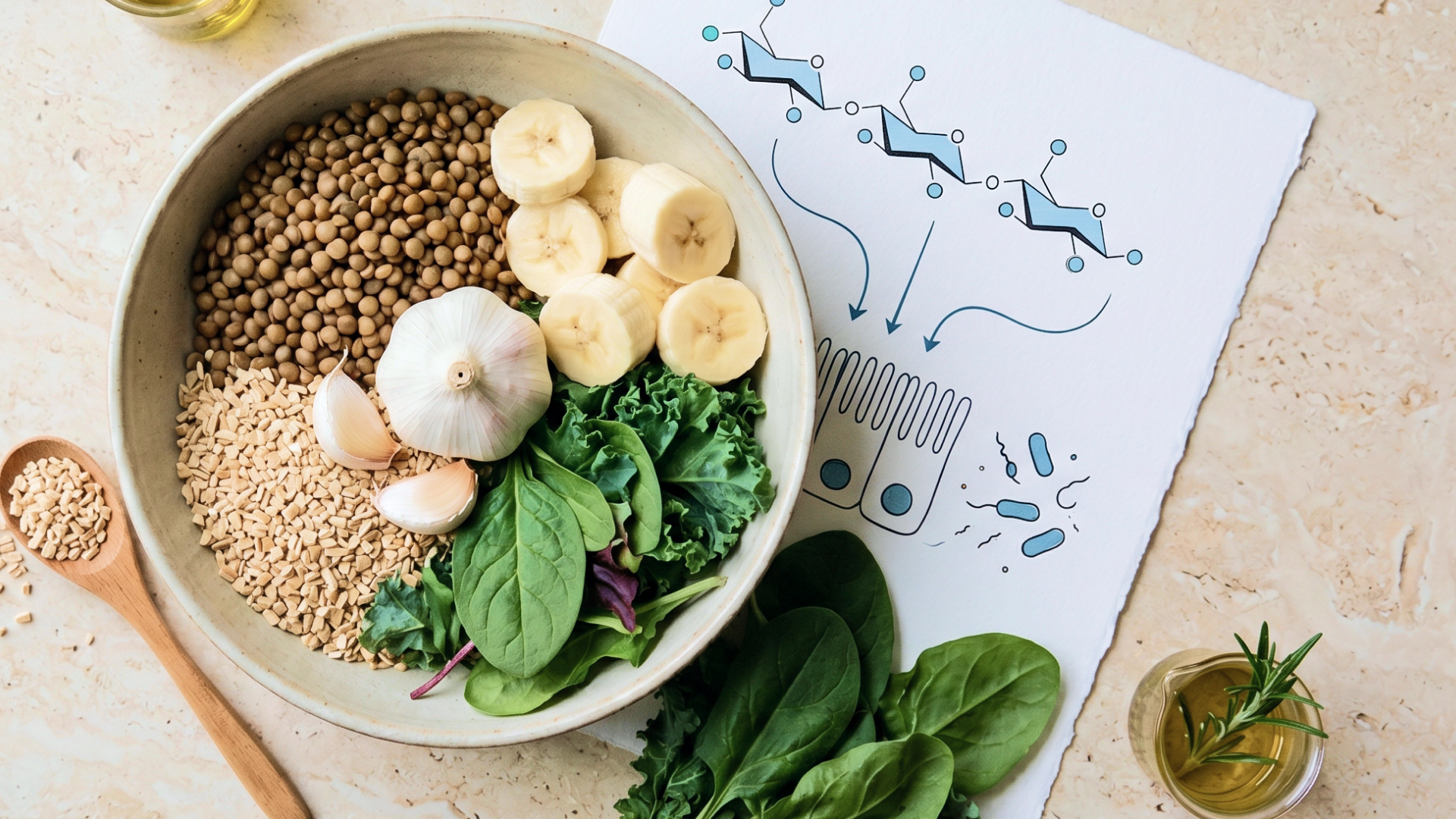
SCFAs are made from dietary fiber found in whole plant foods: vegetables, legumes, whole grains, fruits, nuts, and seeds. The research on SCFA production is built almost entirely on intact fiber from whole foods, not on isolated fiber additives or fortified products.
Variety is also critical. Since different bacteria produce different SCFAs and thrive on different fiber types, eating the same few high-fiber foods only nourishes part of the ecosystem. The goal is diversity of input, because diversity of input produces diversity of output and that is what your body is designed to run on.
To understand how well your microbiome is doing its job, the MAT Kit can give you a direct look at what is happening in your gut, so you are not guessing.
The Bottom Line
Your body long ago delegated the production of some of its most essential chemistry to the microbiome. SCFAs are the output of that decision. They fuel your colon, regulate your gut barrier, shape your immune response, and influence your metabolism in ways your body cannot replicate on its own.
That partnership only works if the microbiome is fed. Fiber, from a genuinely diverse range of whole plant foods, is what keeps the system running. Without it, your gut bacteria cannot deliver what your body was built to receive.
References
Portincasa, P., Bonfrate, L., Vacca, M., De Angelis, M., Farella, I., Lanza, E., Khalil, M., Wang, D., Sperandio, M., & Di Ciaula, A. (2022). Gut Microbiota and Short Chain Fatty Acids: Implications in Glucose Homeostasis. International Journal of Molecular Sciences, 23. https://doi.org/10.3390/ijms23031105
Parada Venegas, Daniela, et al. "Short chain fatty acids (SCFAs)-mediated gut epithelial and immune regulation and its relevance for inflammatory bowel diseases." Frontiers in immunology 10 (2019): 277.
https://DOI.org/10.3389/fimmu.2019.00277