
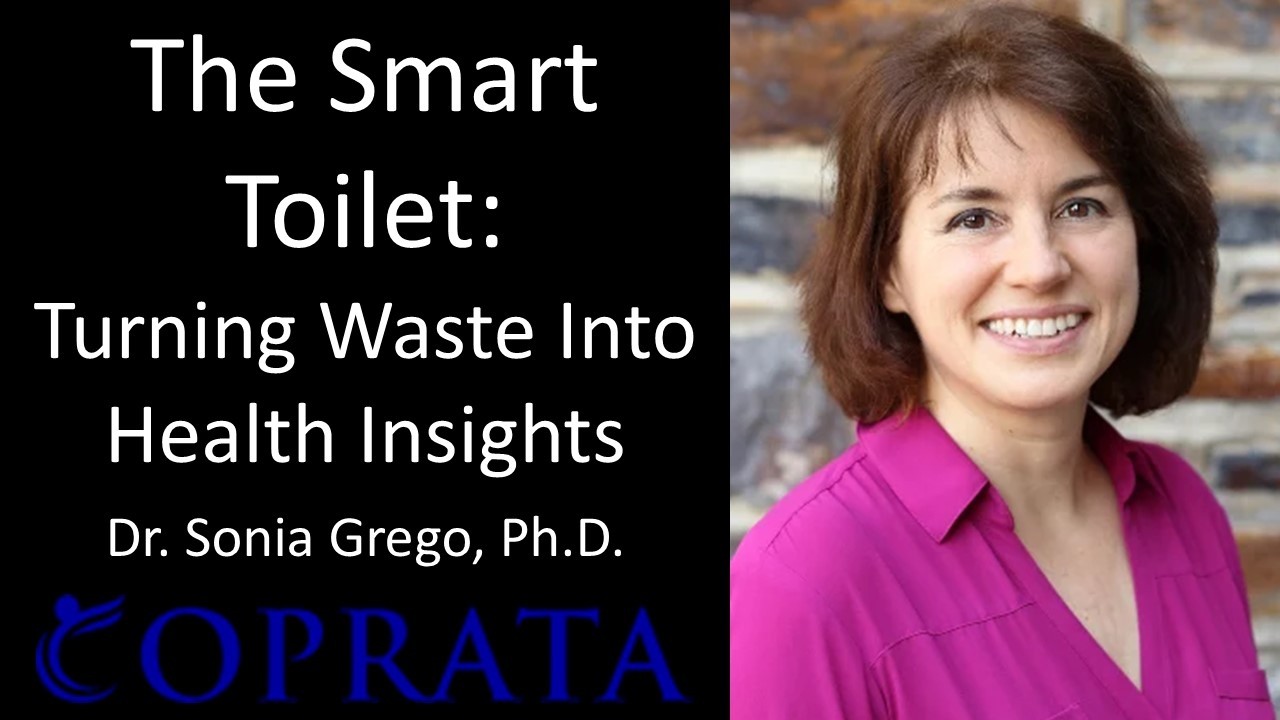
Our founder, Dr. Sonia Grego recently returned to the Progress, Potential, and Possibilities Podcast to share what we've been working on at Coprata and the Duke Smart Toilet Lab. If you've been following the explosion of wearable health tech and at-home diagnostics, you know there's a major gap in how we monitor what's actually happening inside our bodies, biochemically. Our founder dove deep into why gut health is the missing piece in preventive medicine and how we're making it accessible.
The Technology Gap in Health Monitoring
Fitness trackers excel at measuring sleep, steps, and heart rate. Blood tests are becoming more comprehensive thanks to advancing laboratory analysis. But as Dr. Grego explained on the podcast, there's a critical blind spot:
"The aspect that all of these technologies don't cover is what biochemically is happening inside your body on a regular basis. There is this biomarker, this byproduct of your digestive system which is stool, which is a fantastic resource, truly undertapped."
The challenge isn't whether stool contains valuable health data. The science is clear that it does. The challenge has been access: how do you collect, measure, and analyze this information in a way people will actually use on regular basis?
Smart Toilets: Making Health Monitoring Invisible
Our vision was to create technology that seamlessly blends into daily life. The toilet was the obvious platform since it's already part of everyone's routine. But it had to be done right.
Dr. Grego described our approach: "We envisioned a smart home appliance that automatically analyzes stool after flushing. The toilet shouldn't look like a medical device; it should be a beautiful, elegant appliance."
Going to the bathroom is inherently private, and any technology in this space must respect that. We designed our systems with all analytical components concealed in the plumbing, making the analysis passive and unobtrusive.
We successfully piloted these prototypes in homes here in North Carolina, and the data quality exceeded our expectations. We were so proud of the results that we published them in collaboration with gastroenterologists. The technical feasibility is proven. Now, we're focused on demonstrating the key biomarkers that will make this technology truly helpful.
Why Your Gut Controls More Than Digestion
One of the most fascinating parts of the conversation was Dr. Grego's explanation of how the microbiome influences our entire body, not just digestion. The trillions of microbes in our gut produce metabolites when they break down fiber, and these molecules control systems throughout the body.
"Did you know that 70% of your immune function is controlled by the gut? Your immunity, your ability of fighting the flu or a cold, your ability of nipping in the bud with your immune system a precancerous cell that forms somewhere in your body. Your immune strength depends on how healthy and balanced your microbiome is."
She connected the dots between gut health and the conditions most people worry about: cardiovascular disease, type 2 diabetes, cognitive decline. These chronic conditions that become more common after age 40 can be prevented or attenuated with proper gut balance.
The Fiber Revelation
Dr. Grego shared a personal story that really drives home why this work matters. Despite working in gut health and eating what she thought was a healthy diet, her own microbiome biomarker came back in the mediocre range.
"I thought since I work in the space of microbiome and gastrointestinal health and I eat my fruits, my veggies, I thought I've been doing well. I thought my range would be the one that is healthy. No, no, no. I measured myself and I was in the mediocre range."
After increasing her fiber intake to recommended levels (oatmeal with berries for breakfast, adding beans to her salads), her biomarkers shifted to the healthy range within two weeks. Even more compelling: her A1C levels, which had been trending upward due to prediabetes, improved for the first time in years.
This is why fiber is called "the elixir of long life" by nutrition experts and she has become what she describes as a "fiber evangelist." The science shows that preventing chronic diseases requires much more fiber than most people typically consume.
Making Complex Science Simple: The Microbiome Activity Tracker
One innovation Dr. Grego discussed is our Microbiome Activity Tracker, which measures fecal pH. This parameter correlates strongly with short-chain fatty acids (the beneficial metabolites produced by gut bacteria) but is far simpler to measure than comprehensive microbiome sequencing and metabolomics.
While the smart toilet will eventually measure this automatically, we've made the test available now as an at-home kit that works like a COVID test. It's designed for healthy people who want to know if their gut microbiome is supporting their overall health.
As Dr. Grego explained: "This is not a diagnostic test. This is not a medical product. This is a wellness product which we think will really help people live a healthier life."
Our Partnership with Nestlé Health Science
The podcast also touched on our recent collaboration with Nestlé Health Science. We are partnering on a 16-week observational study to examine fiber's impact on the gut microbiome. For the study, we're providing our next-generation stool collection technology, which simplifies the process for participants and ensures high-quality, accurate data for researchers.
This partnership with a global leader in microbiome science validates our work and positions us as a key enabler of longitudinal research. This type of research is crucial for establishing a causal link between dietary choices and health outcomes, rather than just a correlation.
Listen to the Full Conversation
Dr. Grego outlined where we're headed: continuing our research collaboration with Nestlé, expanding our stool collection technologies to more microbiome research groups, and building partnerships with functional and naturopathic doctors who work with people focused on maintaining health long-term.
We're also cultivating strategic partnerships in the sanitation industry to continue developing smart toilet technologies. As she noted, there's immense potential in untapped resources and information from waste, from individual health insights to population-level monitoring.
This summary only scratches the surface of the conversation. Dr. Grego also discussed early detection of colorectal cancer in younger populations, managing chronic digestive conditions, the gut-brain axis, and how wastewater analysis can inform public health initiatives.
Watch the full episode on YouTube to hear Dr. Grego's insights on how we're transforming preventive health through passive, accessible gut health monitoring.