
Short chain fatty acids are the core currency of the gut microbiome. That is not a figure of speech. The microbiome produces hundreds of metabolites and each one plays a role, but SCFAs sit in a different tier entirely. They are produced in the highest quantities, they serve as the primary fuel source for intestinal cells, and they regulate barrier function, immunity, metabolism, and even brain and lung signaling in ways no other microbial metabolite matches.
So if SCFAs matter this much, the obvious question is how anyone measures them. The answer is more complicated than most people expect, and it explains why a simple stool pH reading has become such a useful stand-in.
Where SCFAs are measured, and where they are not
SCFAs are produced in the colon. That is precisely where you would want to sample them, and it is also where direct access is effectively impossible. Direct colonic lumen sampling is impractical outside of specialized clinical settings.
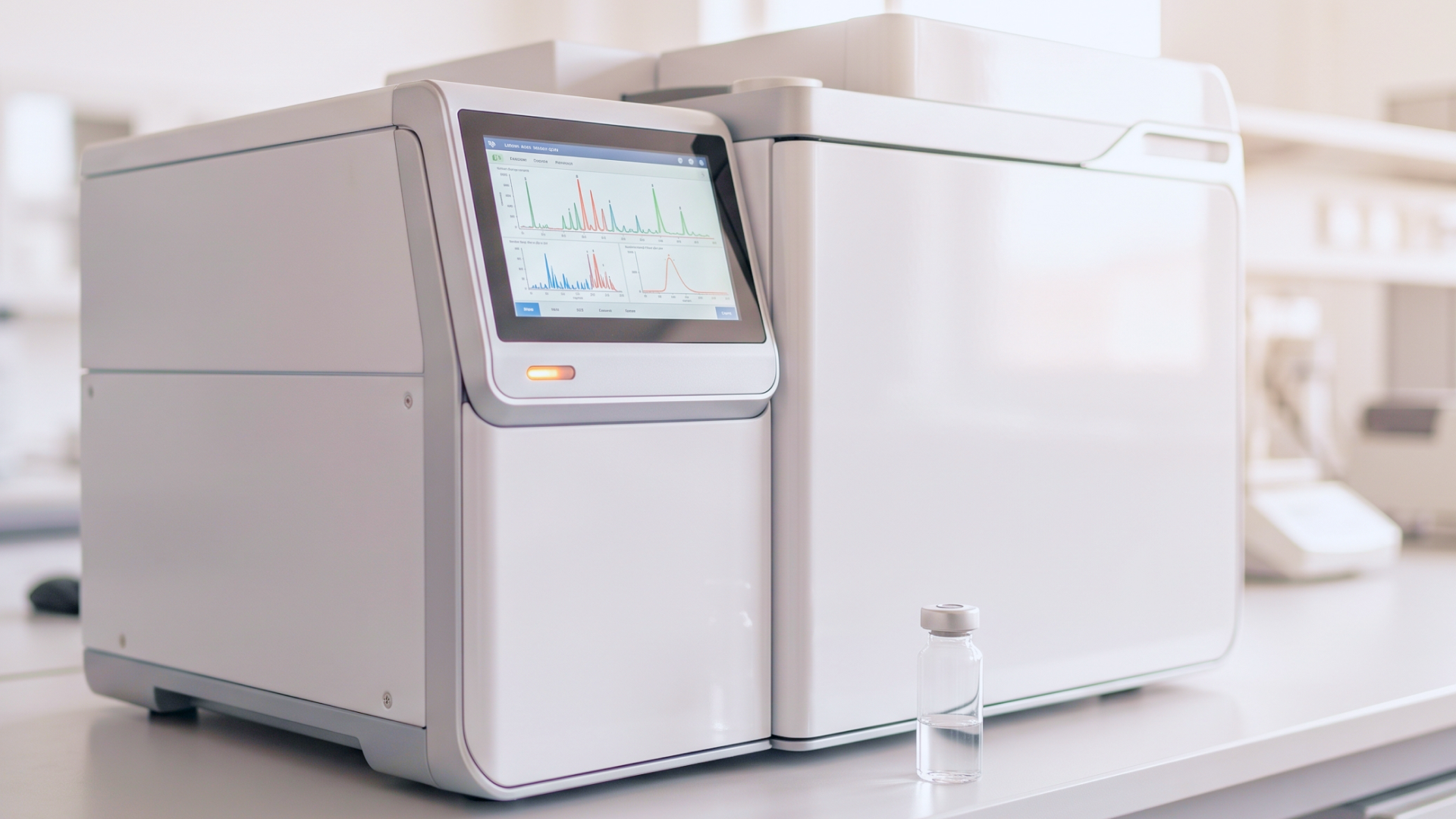
In practice, researchers measure SCFAs in stool, in plasma or serum, or in tissue. Almost every method relies on chromatography paired with mass spectrometry. The two dominant platforms are gas chromatography with mass spectrometry or flame ionization detection, and liquid chromatography with mass spectrometry. Ion exclusion chromatography, HPLC, NMR, and capillary electrophoresis appear less frequently.
Every one of these approaches carries the same three burdens:
- Expensive instrumentation that lives in a laboratory, not a home.
- Complex sample preparation, including solvent extraction after acidification and often derivatization to make the sample volatile enough for the instrument to read.
- Internal standards for calibration and to account for matrix effects.
These methods are genuinely powerful. They yield absolute concentrations, expressed as micromoles per gram of stool or micromolar in plasma, as well as relative composition, meaning the molar percentage of each SCFA within the total. In stool and colon, the acetate to propionate to butyrate ratio typically lands near 60:20:20. Researchers often work in percentages rather than absolute values because relative composition reduces the enormous variation between individuals and makes it easier to compare SCFA profiles across diets and disease states.
The tradeoff is accessibility. These are laboratory methods, and they remain confined to the laboratory.
Blood versus stool: two different windows
SCFAs are produced in the colon, then mostly absorbed and metabolized before a small fraction ever appears in stool or blood. Fecal and blood measurements therefore capture different points in that process, and the two are frequently poorly correlated with each other.
Fecal SCFAs represent what was not absorbed in the distal colon. That number is shaped by production rate, absorption efficiency, transit time, and microbiota composition all at once. Less than five percent of what gets produced is excreted, which means fecal SCFA levels are better understood as a marker of the luminal environment and of microbial activity than as a measure of total production.
What makes fecal measurement valuable is its relationship to the microbiome itself. Fecal SCFAs correlate well with SCFA-producing bacteria and with broader microbiome features, and they are more predictable from diet and microbiota composition than plasma levels are.
Can SCFA production actually be changed?
Yes, and faster than many people assume. Controlled human studies show that specific interventions shift SCFA production within days to a few weeks, though the size of the effect depends heavily on the substrate, the dose, and the individual's baseline microbiota.
Three patterns come out of the short duration fiber and prebiotic literature.
Resistant starch
In a two week trial in a large adult cohort, resistant potato starch significantly increased total fecal SCFAs and butyrate. Maize resistant starch and inulin altered microbiota composition in the same study but did not consistently raise butyrate.
Probiotic plus prebiotic
Two weeks of Bifidobacterium animalis subsp. lactis combined with inulin increased fecal acetate, propionate, and butyrate, and enriched the genes associated with SCFA production.
High fiber bread
Swapping white bread for high fiber bread over two weeks raised fiber intake and increased SCFA producing taxa along with measured butyrate producing capability. The SCFA concentrations themselves only trended upward rather than reaching statistical significance.
The honest summary is that targeted fibers, prebiotics, SCFA mixtures, and certain polyphenol rich foods can move SCFA production within one to three weeks. However, not every short term intervention succeeds, and outcomes depend on what you feed the microbiome and what that microbiome looked like to begin with.
Is more always better?
This is where the science gets more interesting than the marketing. Reviews consistently support the position that higher SCFA production from fiber is health promoting, with benefits for barrier function, inflammation, glucose homeostasis, and cardiometabolic risk. Blaak and colleagues are careful to frame increased SCFA production as a promising strategy rather than a settled one, noting that most human evidence remains short term and that better controlled trials are still needed.
Liu and colleagues push further, arguing that SCFA concentrations exist in a dynamic balance and that both excessively low and excessively high levels may carry adverse effects. They point to mouse work in which very high intestinal butyrate on a high fiber diet coincided with increased colonization by pathogenic bacteria, decreased body weight, and increased mortality.
The takeaway is not that more SCFA is bad. More SCFA from appropriate substrates, produced at a sustainable flux, appears beneficial, while raw concentration on its own is not a universal good. There is likely a comfortable middle ground.
Blaak and colleagues also note that SCFA responses are probably shaped by age, medication use, physical activity, alcohol and tobacco use, and other microbiome shaping factors, though detailed human data on those variables remain sparse.
Where stool pH enters the picture
We've got the relationship that makes all of the above practically useful. Across eleven human studies, higher total fecal SCFA concentrations were associated with lower fecal pH, meaning more acidic stool. In five of those studies with pH data available, total SCFA and butyrate percentage both increased as pH fell. Other work reports the same inverse correlation, including comparisons between vegans and omnivores, where higher fiber intake tracks with lower stool pH and the same inverse SCFA relationship holds.
Oliver and colleagues state the implication directly: fecal pH can serve as a proxy for SCFA activity.
Two caveats belong here. Stool pH is an indirect readout, and it is shaped not only by SCFA production but also by absorption, transit time, diet, and other fermentation products. The same balance logic also applies. More acidic is not automatically better. As with SCFAs themselves, there is a healthy intermediate rather than a race to the bottom of the pH scale.
The accessibility problem, and what changed
Measuring stool pH in a laboratory is far simpler than running mass spectrometry on SCFAs. It still requires specialized instruments and strictly refrigerated sample transport, which has kept it out of reach for anyone outside a research setting.
That is the gap Coprata built the Microbiome Activity Tracker to close. Fecal pH is a validated, meaningful window into microbial fermentation activity, and until recently it was not available to people who wanted to track their own gut health over time. Now it is.
If you want to see what your fermentation activity actually looks like, and how it responds when you change what you eat, that is what the MAT kit measures.
References
Blaak, E., Canfora, E., Theis, S., Frost, G., Groen, A., Mithieux, G., Nauta, A., Scott, K., Stahl, B., Van Harsselaar, J., Van Tol, R., Vaughan, E., & Verbeke, K. (2020). Short chain fatty acids in human gut and metabolic health. Beneficial Microbes, 1-46.
Liu, M., Lu, Y., Xue, G., Han, L., Jia, H., Wang, Z., Zhang, J., Liu, P., Yang, C., & Zhou, Y. (2024). Role of short-chain fatty acids in host physiology. Animal Models and Experimental Medicine, 7(5), 641-652.
Oliver, A., Alkan, Z., Stephensen, C., Newman, J., Kable, M., & Lemay, D. (2024). Diet, Microbiome, and Inflammation Predictors of Fecal and Plasma Short-Chain Fatty Acids in Humans. The Journal of Nutrition, 154, 3298-3311.